Back Pain Treatment in Indore – Minimally Invasive & Non surgical Options
Home » Back Pain Treatment in Indore – Minimally Invasive & Non surgical Options
Back Pain Treatment in Indore
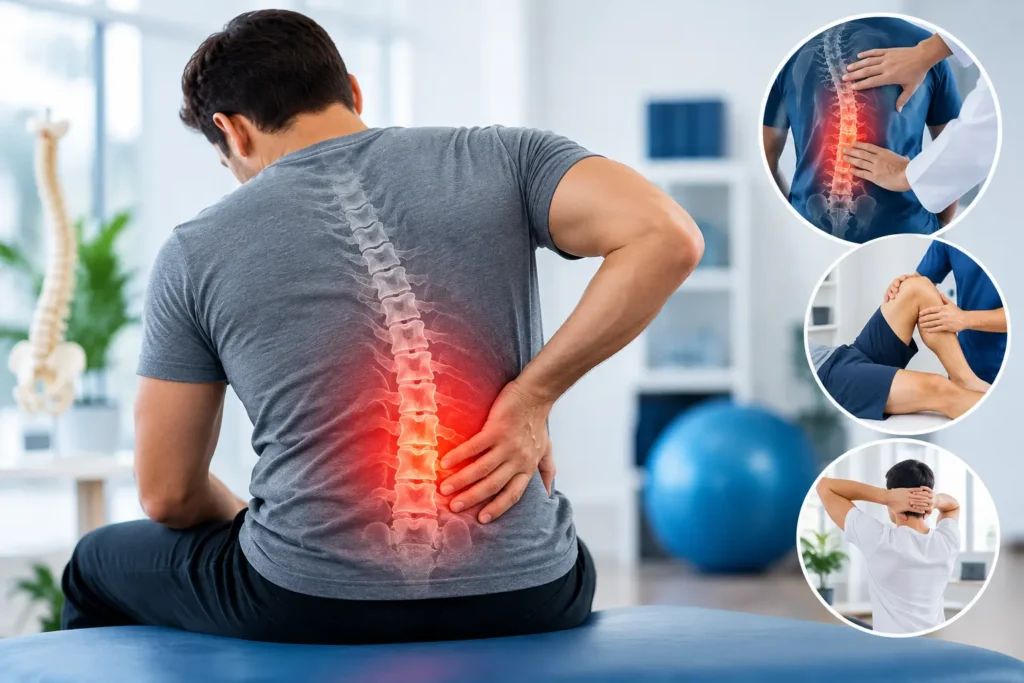
If you’re wondering whether your back pain is something to worry about, here’s the honest answer: most back pain isn’t dangerous, but certain patterns are worth taking seriously. What matters is understanding the difference, and that depends more on what’s causing the pain than how much it hurts on a given day.
Back Pain Treatment in Indore at Samarth Neuro Spine Centre begins with a detailed evaluation rather than assuming every case needs the same approach. Depending on the underlying cause, treatment may include physiotherapy, medication, activity modification, targeted interventions, or surgery when it’s clinically appropriate. The goal isn’t simply to reduce pain for the moment. It’s to identify the cause and choose a treatment plan that actually makes sense for your condition.
When Should You See a Doctor for Back Pain?
Back pain deserves medical evaluation when it persists, keeps returning, affects normal movement, or comes with neurological or other concerning sympt
Seek prompt medical attention if you experience:
- New or worsening weakness in the leg
- Numbness or tingling that travels into the leg
- Loss of bladder or bowel control
- Numbness around the groin or inner thighs
- Back pain following a significant fall or accident
- Fever or unexplained weight loss along with back pain
- Severe or progressively worsening pain
- Pain accompanied by significant neurological symptoms
If symptoms are severe, rapidly worsening, or associated with bladder or bowel changes and significant weakness, urgent medical assessment is important, not a wait-and-see approach.
What Can Cause Back Pain?
Getting the cause right is what determines whether you need physiotherapy, medication, an injection, or, in rare cases, surgery.
Common causes include:
Muscle or ligament strain
Herniated or slipped disc
Sciatica and nerve compression
Spinal canal stenosis
Degenerative spinal changes
Vertebral compression fractures
Spinal deformities
Less common conditions such as infection, tumors, or serious nerve compression
Because different causes can produce similar symptoms, treatment should be based on clinical evaluation, not pain intensity alone.
Non-Surgical Back Pain Treatment in Indore
Not every patient with back pain needs a procedure or surgery. When appropriate, Non-Surgical Back Pain Treatment in Indore begins with conservative measures designed around the underlying cause and the patient’s specific symptoms.
Physiotherapy and exercise are often the starting point. A structured program can improve mobility, strength, and function, with exercises selected according to the patient’s condition rather than a routine applied to everyone. Patients who benefit from technology-assisted rehabilitation can also explore our robotic physiotherapy program at Samarth Neuro Spine Centre.
Other conservative options include:
- Medication, considered for pain or inflammation when clinically appropriate, based on symptoms and medical history
- Activity and lifestyle changes, including posture, work habits, and physical conditioning, to support recovery and reduce recurring strain
- Targeted interventions, such as targeted injections, considered for selected patients when conservative treatment alone doesn’t provide adequate relief
Lower Back Pain Treatment in Indore
Lower back pain can come from muscles, discs, joints, nerves, or other spinal structures. Lower Back Pain Treatment in Indore depends on the underlying cause and whether symptoms are limited to the back or extend into the leg.
If lower back pain is accompanied by leg pain, numbness, tingling, or weakness, nerve compression may need to be evaluated. For symptoms specifically related to sciatica or a slipped disc, our Sciatica Treatment and Slip Disc Treatment pages cover those conditions in more depth.
Chronic Back Pain Treatment: When Pain Has Lasted Months, Not Weeks
When back pain continues for months or repeatedly returns, treating each flare-up on its own may not address the underlying problem. Chronic Back Pain Treatment in Indore looks at the full picture rather than just the current episode.
A chronic back pain evaluation typically considers:
- The pattern and duration of symptoms
- Neurological symptoms such as numbness or weakness
- Previous treatments and their response
- Physical examination findings
- Imaging when clinically indicated
- Whether rehabilitation, interventional treatment, or surgical evaluation is appropriate
The focus is on understanding why the pain is persisting and what treatment is appropriate next, not repeatedly treating the symptoms without reassessment.
When Is Back Pain Surgery Actually Needed?
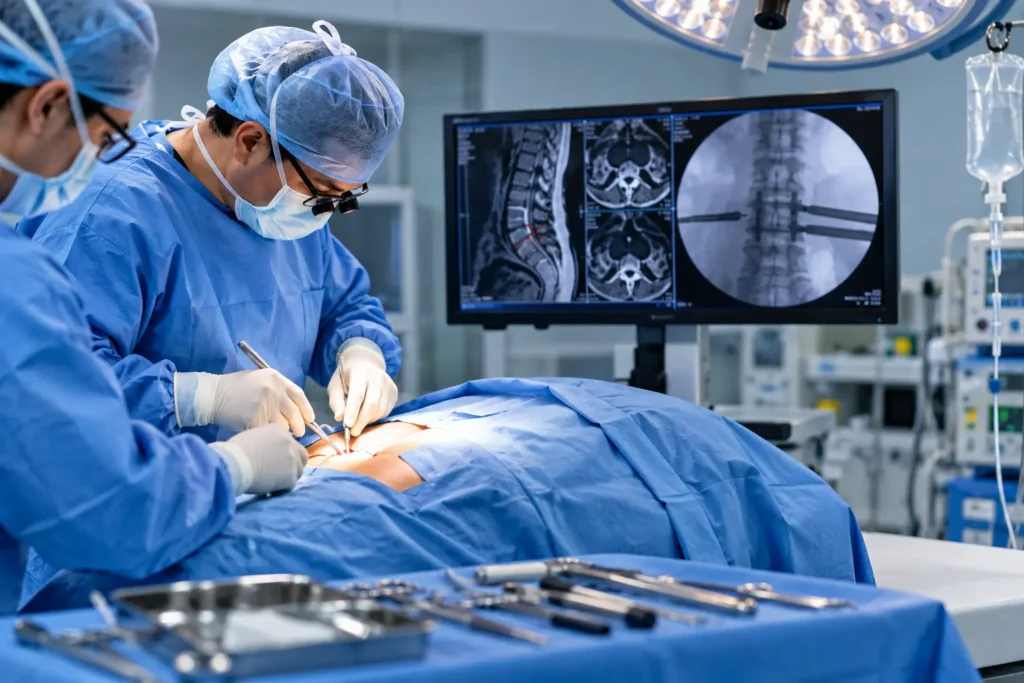
Surgery isn’t automatically recommended just because an MRI shows a disc problem or degenerative changes. A surgical opinion may be considered when there’s significant nerve compression, progressive neurological weakness, certain structural spinal problems, serious underlying conditions, or persistent symptoms that haven’t responded adequately to appropriate non-surgical treatment. The decision depends on the diagnosis, symptoms, neurological examination, imaging findings, and overall health.
If you’re weighing whether physiotherapy is enough or whether your case needs a surgical opinion, our piece on how spine surgeons actually decide between physiotherapy and surgery walks through exactly what that evaluation looks like.
About Dr. Sandeep Moolchandani
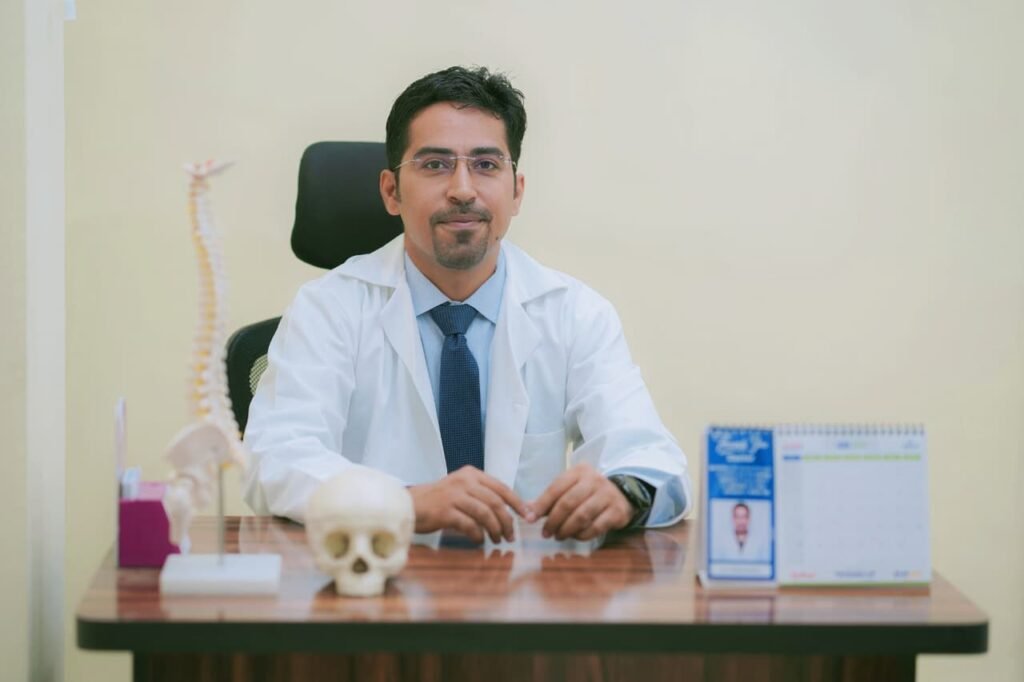
Dr. Sandeep Moolchandani is a Consultant Neuro and Spine Surgeon in Indore with 16 years of clinical experience. His training includes neurosurgical centres associated with Maulana Azad Medical College and LNJP Hospital, New Delhi, and MGM Medical College and MY Hospital, Indore. His areas of practice include spine surgery, neuro-oncology, neurotrauma, pediatric neurosurgery, vascular neurosurgery, and endoscopic spine surgery.
For patients with back pain, the focus is on identifying the underlying cause and determining whether conservative treatment, rehabilitation, an intervention, or surgery is appropriate.
Why Choose Samarth Neuro Spine Centre for Back Pain Treatment?
Back pain doesn’t have one treatment that works for everyone. A Back Pain Doctor in Indore search usually means you’re looking for someone who won’t jump straight to surgery, and at Samarth Neuro Spine Centre, the approach is centered on understanding your symptoms and identifying the likely cause first.
Condition-focused evaluation
Symptoms, examination findings, and imaging are considered together, rather than treating an MRI report in isolation.
Non-surgical options when appropriate
Physiotherapy, medication, activity modification, and other suitable treatments are considered before surgery.
Surgical expertise when required
When surgery is medically appropriate, the treatment plan is based on your specific spinal condition and clinical needs
Rehabilitation and follow-up
Recovery doesn’t end when symptoms improve. Appropriate rehabilitation and follow-up help monitor progress and functional recovery.
If you’re searching for a Back Pain Specialist Near Me Indore or a Back Pain Doctor Near me, what matters most is finding a provider who investigates the actual cause of your pain rather than treating every case the same way.
Precise Care for Back Pain: Patient Stories
Book an Appointment
Book an Appointment
Get In Touch With Us
Samarth Neuro Spine Centre
G-02, Prime Arcade Building, Plot 428, Opposite CHL Hospital, near Dewas Naka, Part I, Scheme No 114, Indore, Madhya Pradesh 452010
Timing: 5pm to 8pm
Contact: +91 74772 06039
Shalby Hospital, Indore
Dr. Sandeep Moolchandani, Shalby Hospital, Room No 9, 2nd Floor, Race Course Road, Near Janjeerwala Square, Indore
Timing: 11am to 5pm
Contact: +91 7000 11 5912
FAQ
Frequently Asked Questions
It's worth getting urgent medical evaluation if back pain comes with leg numbness, new or worsening weakness, loss of bladder or bowel control, fever, unexplained weight loss, or pain after a fall or accident. Without these warning signs, mild to moderate back pain can often be given a couple of weeks to improve with appropriate rest, gentle movement, and routine care.
No. Most back pain responds to non-surgical treatment, including physiotherapy, medication, and targeted injections. Surgery is recommended only when conservative treatment hasn't worked or specific red flag symptoms are present
Very common. Research puts the lifetime prevalence at around 66% among Indian adults, meaning most people will experience it at some point, with women and manual workers affected disproportionately.
Acute back pain typically resolves within a few weeks as the body heals. Pain that continues beyond three months is classified as chronic and usually needs a more structured, long-term management plan.
Yes. Regular low-impact exercise, posture correction, weight management, and an anti-inflammatory diet can meaningfully reduce both the frequency and severity of back pain over time.
Diagnosis typically starts with a physical exam and detailed history, with MRI, X-rays, or other imaging used when needed to confirm a specific structural cause like a herniated disc or spinal stenosis.
It can, especially if the underlying cause, like posture, weak core muscles, or occupational strain, isn't addressed alongside symptom relief. This is why a proper diagnosis matters more than just treating the current flare-up.