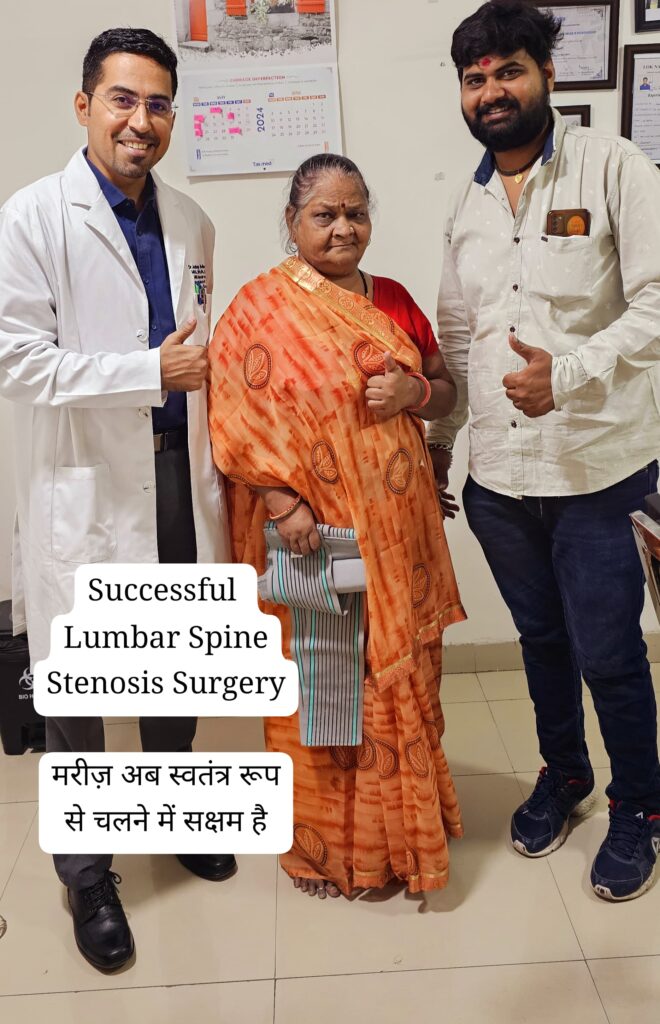

Yes, lumbar spine stenosis surgery can be performed safely even in elderly patients with serious comorbidities like uncontrolled diabetes and chronic kidney disease, provided the case is planned with a multidisciplinary team. This isn’t a general claim. It’s exactly what our team at Samarth Neuro Spine Centre achieved with a Spinal Decompression Surgery in Indore performed on a 68-year-old patient, and this article walks through her actual case from diagnosis to recovery.
Most people assume that once a patient crosses a certain age or has other health conditions, spine surgery is simply off the table. That assumption keeps a lot of elderly patients living with pain they don’t have to live with. Here’s what really happened, and what it tells you about when high-risk spine surgery is genuinely possible.
The Patient’s Condition Before Surgery
The patient came to us bed bound, unable to walk more than a few steps without severe pain. Along with the pain, she had developed urinary incontinence, a sign that nerve compression had become significant. She also carried two serious complicating conditions:
- Uncontrolled diabetes, which affects wound healing and infection risk
- Chronic renal failure, which changes how the body handles anaesthesia, fluids, and medication
Diagnosis: Lumbar canal stenosis from L3 to L5, with a severely degenerated spine, disc prolapse at L4-L5 and L5-S1 (the kind of damage that often needs Disc Prolapse Surgery in Indore on its own, let alone alongside stenosis), and osteoporotic compression fractures at multiple levels. In simple terms, the space around her spinal nerves had narrowed so much that the nerves controlling her legs and bladder were under constant pressure.
Why This Case Was Considered High Risk
Three factors made this a genuinely difficult decision, not a routine one:
- Age. At 68, tissue healing is slower and the margin for surgical error is smaller.
- Uncontrolled diabetes. This raises the risk of post-surgical infection and delays recovery.
- Chronic renal failure. Kidney function directly affects how safely a patient can be given anaesthesia and post-operative medication.
By the family’s own account, they had started losing hope that any treatment could help her. This is a common feeling among families of elderly patients, and it’s usually based on incomplete information rather than the actual medical picture.
How the Case Was Managed
Getting this right required more than surgical skill. It required a coordinated plan between specialists.
The approach included:
- A joint evaluation between the spine surgery team and Dr. Anita Chouksey, nephrologist, to manage kidney function safely through the surgery
- Diabetes control brought to a safer range before proceeding
- Surgery performed: L5 laminectomy, L4-L5 discectomy, and bilateral foraminal decompression at L4-L5 and L5-S1, relieving pressure on the compressed nerves
- Close post-operative monitoring given her comorbidities
The surgery relieved her pain immediately. She was discharged after three days, a relatively short stay considering the complexity of her health profile.
Recovery and Long-Term Outcome
Pain relief after decompression surgery is often immediate, but recovery doesn’t end at the operating table, especially with osteoporotic fractures involved. For the compression fractures, she was started on a synthetic form of parathyroid hormone (PTH) therapy to help rebuild bone density and strength over time.
Today, she walks without pain, something that had felt out of reach for her family just weeks earlier.
What This Case Actually Teaches Us
A few honest takeaways worth knowing if you or a family member is facing a similar decision:
- Age alone is not a disqualifier. What matters more is how well existing conditions are controlled before surgery.
- Comorbidities need a team, not a single surgeon. This case worked because of coordinated care between spine surgery and nephrology, not despite it.
- Delaying surgery out of fear can make outcomes worse. Nerve compression that causes bladder symptoms is a sign the condition has progressed significantly.
- Recovery planning matters as much as the surgery itself. Bone health, in this case, needed its own treatment track.
If you’re trying to understand whether surgery is generally a realistic option for an older family member, our broader guide on whether spine surgery is safe for elderly patients covers the decision-making process in more depth.
Frequently Asked Questions
1. Can diabetic patients safely undergo spine surgery?
Yes, with proper blood sugar control before surgery and close monitoring afterward. Uncontrolled diabetes raises infection risk, which is why stabilising it beforehand is a critical step, not an optional one.
2. Is spine surgery possible for patients with kidney disease?
It can be, but it requires a nephrologist working alongside the spine surgeon to manage anaesthesia, fluids, and medication safely throughout the process.
3. What are the signs that lumbar spine stenosis has become severe?
Difficulty walking more than short distances, leg pain that worsens while standing, and loss of bladder or bowel control are signs the condition needs urgent evaluation.
4. How long is recovery after lumbar decompression surgery?
Many patients experience pain relief immediately after surgery. Hospital stays are often just a few days, though full functional recovery, especially with bone health issues, can take longer.
5. Does old age increase the risk of spine surgery complications?
Age is one factor among several. Controlled comorbidities and a well-planned surgical approach often matter more than age itself in determining outcomes.
Final Word
This case is a reminder that “too old” or “too risky” isn’t always the full picture. With the right evaluation and the right team, patients who seem to have run out of options often still have one worth exploring.
If a family member is living with severe back or leg pain and you’ve been told surgery isn’t possible because of age or other health conditions, get a second opinion before accepting that as final. Most families searching for the Best Spinal Surgeon Near Me Indore are doing it at exactly this stage, after being turned away elsewhere. Consult Dr. Sandeep Moolchandani at Samarth Neuro Spine Centre for an honest evaluation of what’s actually possible. Call +91-7000-11-5912 or book your appointment online today.