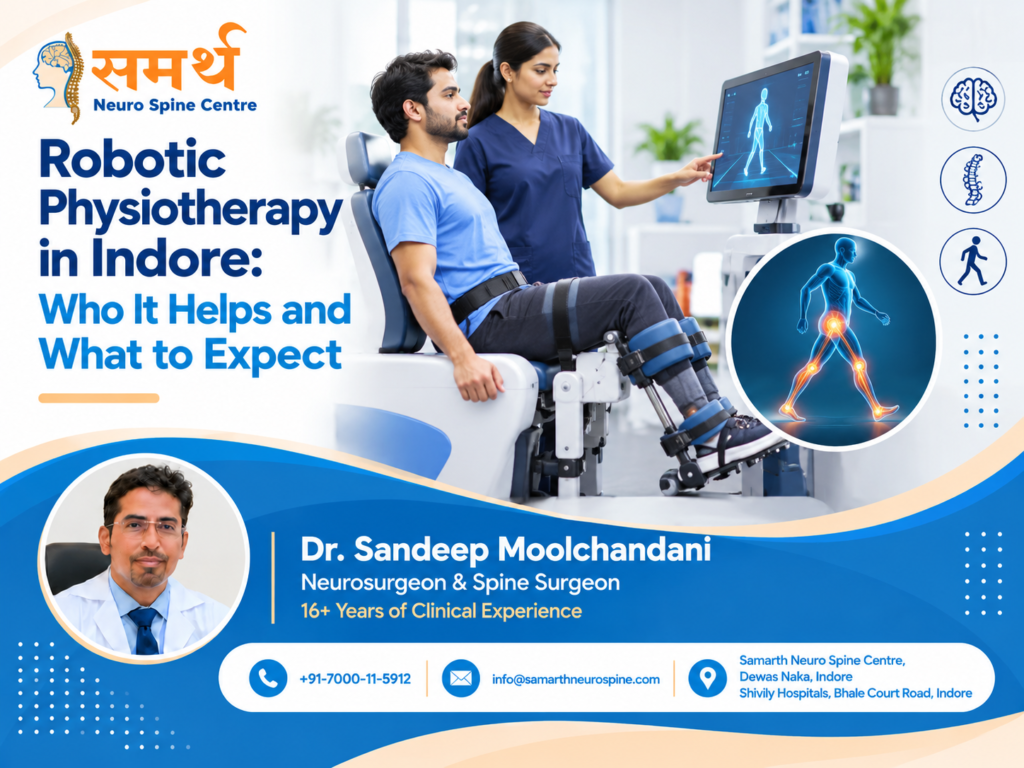
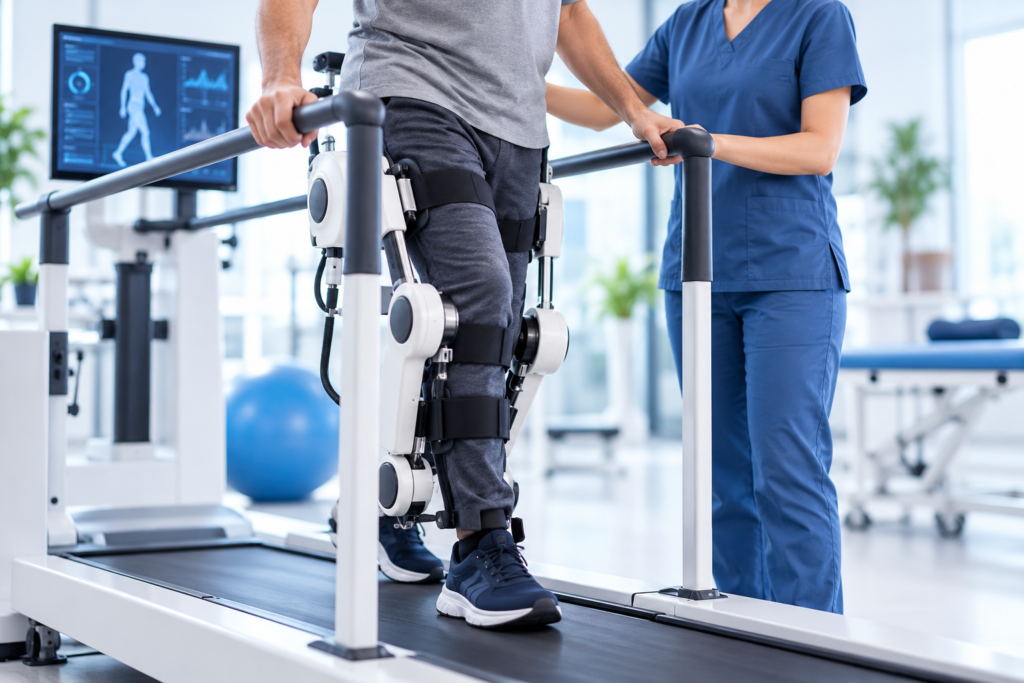
Robotic physiotherapy uses movement-assisted devices alongside hands-on therapy to help people with weakness, stiffness or poor balance practise the right movement again and again, with accurate feedback. It is most useful after a stroke, a spinal cord or nerve injury, or spine surgery, and for people who have stopped improving with routine exercises. It supports a therapist’s work. It does not replace the doctor’s diagnosis or the therapist’s hands.
If you or a family member is struggling to walk, lift an arm or trust a weak leg, this guide explains who benefits, what the evidence says, and what a good programme looks like.
What Robotic Physiotherapy Actually Is
Think of it as guided repetition. Recovering movement after nerve damage needs hundreds of correct, controlled repetitions, and tired muscles struggle to deliver them. A robotic device supports the limb, repeats the movement the same way each time, and records how you are doing.
What this adds to regular physiotherapy:
- Precision: the same movement pattern every time, without therapist fatigue
- Repetition: many more quality repetitions per session
- Feedback: live information on effort, range and progress
- Measurement: numbers you can compare week to week, not just “feels better”
The therapist still decides what you do, how hard, and when to change it.
Who Can Benefit
Robotic-assisted training may help when the problem is how the brain, spinal cord or nerves control movement:
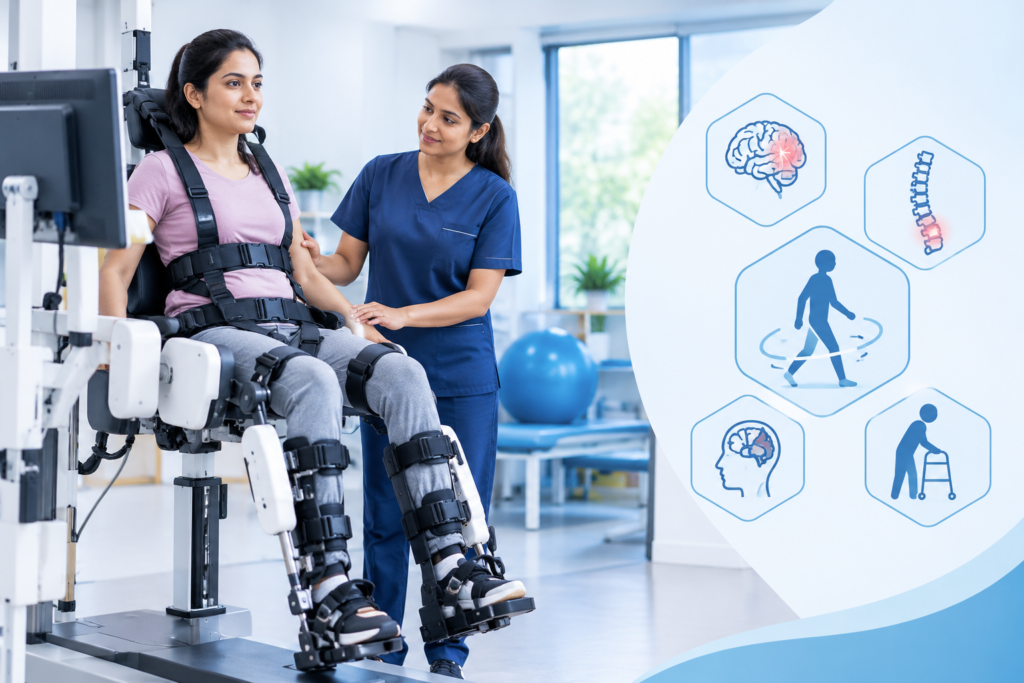
- Stroke: weakness on one side, difficulty walking, or an arm that will not cooperate
- Spinal cord injury: relearning standing, balance and stepping
- After spine surgery: rebuilding strength once the surgeon clears you to start
- Nerve weakness: such as a weak foot after nerve compression
- Plateau cases: progress has stalled with standard exercises
- Children with movement difficulties: after a proper assessment of what suits them
It is not for everyone. Some patients do perfectly well with regular physiotherapy, and a clear assessment should tell you which group you fall in.
What the Evidence Says
The strongest research is on walking after stroke. A 2025 Cochrane review of 101 trials with 4,224 adults found that adding a gait-training device to physiotherapy probably helps more people walk independently by the end of treatment. For every nine people treated, about one extra person walked independently. The devices may help most in the first three months after a stroke, and the benefit may not last at later follow-up.
Honest reading is simple. Robotic training adds something when it is used early, used well, and used alongside skilled physiotherapy. It is not a shortcut.
Stalled recovery? Do not guess what is holding you back. Get a movement assessment and a clear plan.
What a Programme Looks Like
Good Neuro Physiotherapy in Indore follows a clear path, not a fixed number of sessions:
- Assessment: strength, balance, walking, sensation and daily-life limits, reviewed against your scans and reports
- Goals you can measure: for example, walking 100 metres or lifting a cup
- Robotic-assisted sessions plus hands-on work: usually 30 to 60 minutes
- A home plan: short exercises to keep gains between visits
- Regular reassessment: the plan changes when your progress does
At Samarth Neuro Spine Centre, this work is led by Dr. Shivani Raikwar, a neuro and spine physiotherapist trained in spinal mobilisation, dry needling and cupping therapy. She works alongside Dr. Sandeep Moolchandani, so your rehabilitation is planned with your surgical or medical team, not apart from it.
Disc Prolapse and Sciatica: Where Robotic Physiotherapy Fits
Most disc and sciatica patients recover with standard physiotherapy, and robotic training is not needed for them. It can help later in the journey, for example when leg weakness lingers or progress stalls. A programme here usually combines spinal mobilisation, core strengthening, nerve-friendly movement and posture work.
If leg pain is your main problem, start with our sciatica treatment page. If surgery is being discussed, read about disc prolapse surgery. Our guide on how doctors decide between physiotherapy and surgery for back pain explains how that decision is made.
Paralysis and Weakness After a Stroke
Rehabilitation after a stroke works best when it starts early and stays consistent. Robotic-assisted sessions give a weak limb many safe, supported repetitions while the brain is most ready to relearn. Families looking for Physiotherapy for Paralysis in Indore should know that physiotherapy supports medical stroke care and does not replace it.
How to Choose a Rehabilitation Centre
Choosing among the Best Physiotherapists in Indore is easier with a checklist. Look for:
- A named, qualified therapist who assesses you before treatment starts
- Written, measurable goals and regular reassessment
- Coordination with your treating doctor
- Honest answers about timelines, with no promises of a cure
- A home plan, so recovery continues between sessions
If a centre cannot answer these, keep looking.
Frequently Asked Questions
1. What conditions does robotic physiotherapy treat?
It is mainly used for stroke, spinal cord and nerve injury, recovery after spine surgery, and movement problems that have stopped improving. A clinical assessment decides whether it suits you.
2. Is robotic physiotherapy safe?
It is generally safe when supervised by a trained therapist and cleared by your doctor. Some conditions, such as an unhealed fracture, need your doctor’s approval first.
3. How is it different from traditional physiotherapy?
Traditional physiotherapy relies on the therapist’s hands and your effort. Robotic therapy adds supported, repeatable movement and measurable feedback. Many programmes combine both.
4. How long is a session?
Usually 30 to 60 minutes, depending on your condition and stamina.
5. How many sessions will I need?
It varies with the condition, how long ago it began, and your goals. Your therapist should review progress regularly and tell you honestly if the plan needs to change.
6. Can robotic physiotherapy avoid surgery?
Not by itself. Surgery depends on what your scan and examination show. Rehabilitation can help many patients recover without it, but it should never delay urgent care for worsening weakness or loss of bladder or bowel control.
7. How do I find the best robotic physiotherapist near me in Indore?
Look for a named neuro physiotherapist, a proper assessment, measurable goals and links with your treating doctor. Insurance cover varies, so check with your insurer before starting.
Final Word
Robotic physiotherapy works best as a precise tool in skilled hands: right patient, right timing, clear goals. If you have been searching for a Physiotherapy Centre Near Me Indore and want a plan built around your recovery, begin with an assessment.
Ready to start moving better? Book Your Assessment at Samarth Neuro Spine Centre