TLIF surgery, short for Transforaminal Lumbar Interbody Fusion, is recommended when a damaged spinal disc is causing persistent nerve compression, instability, or a vertebra slipping out of place, and conservative treatment hasn’t worked. It’s not a first-line treatment. It’s what comes after physiotherapy, medication, and injections have genuinely failed to relieve symptoms. Here, the spine team at Samarth Neuro Spine Centre explains exactly what the procedure involves and when it actually applies to you.
A lot of patients come across the term “TLIF” online and assume it applies to any kind of chronic back pain. It doesn’t. This surgery treats a specific set of conditions, and knowing whether you actually fall into that category can save you a lot of unnecessary worry.
What Is TLIF Surgery?
TLIF surgery treats the lumbar spine (lower back) by removing a damaged disc, placing a bone graft in the empty disc space, and stabilising the spine with screws and rods so the vertebrae fuse together over time. It’s essentially a two-part solution: relieving pressure on the compressed nerve, and stabilising a segment of the spine that has become unstable. Whether TLIF actually fits your case is something only a qualified Spine Surgeon in Indore can confirm after reviewing your imaging and history.
Conditions TLIF is typically used for:
- Degenerative disc disease that hasn’t responded to conservative care
- Herniated or prolapsed discs pressing on spinal nerves
- Spondylolisthesis, where one vertebra slips forward over another
- Spinal stenosis with associated instability
- Recurrent disc problems at the same spinal level
Symptoms That Suggest TLIF Might Be Needed
Not every back pain patient needs this procedure, but certain symptom patterns are worth flagging to a spine specialist.
Watch for:
- Leg pain, numbness, or weakness that appears while walking and improves with rest or sitting (known as neural claudication)
- Difficulty walking more than a short distance without symptoms worsening
- Lower back pain that has persisted for months despite physiotherapy and medication
- A sensation of the spine feeling unstable or “giving way”
- New difficulty controlling bladder or bowel function, which needs urgent evaluation
A Real Case: When Conservative Treatment Wasn’t Enough
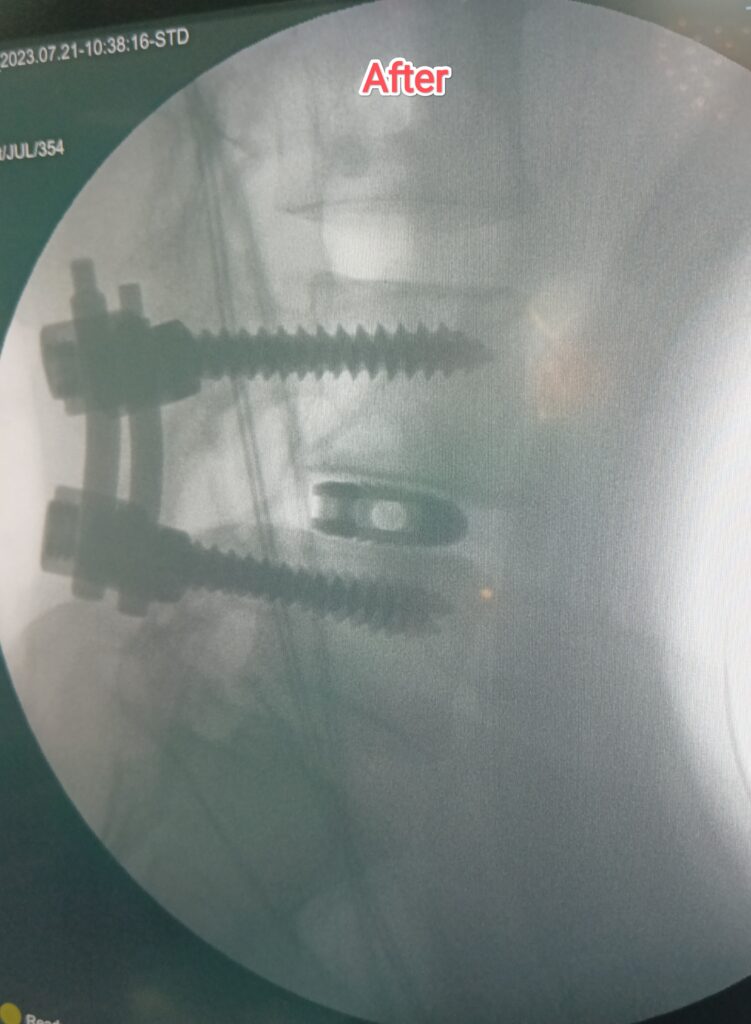
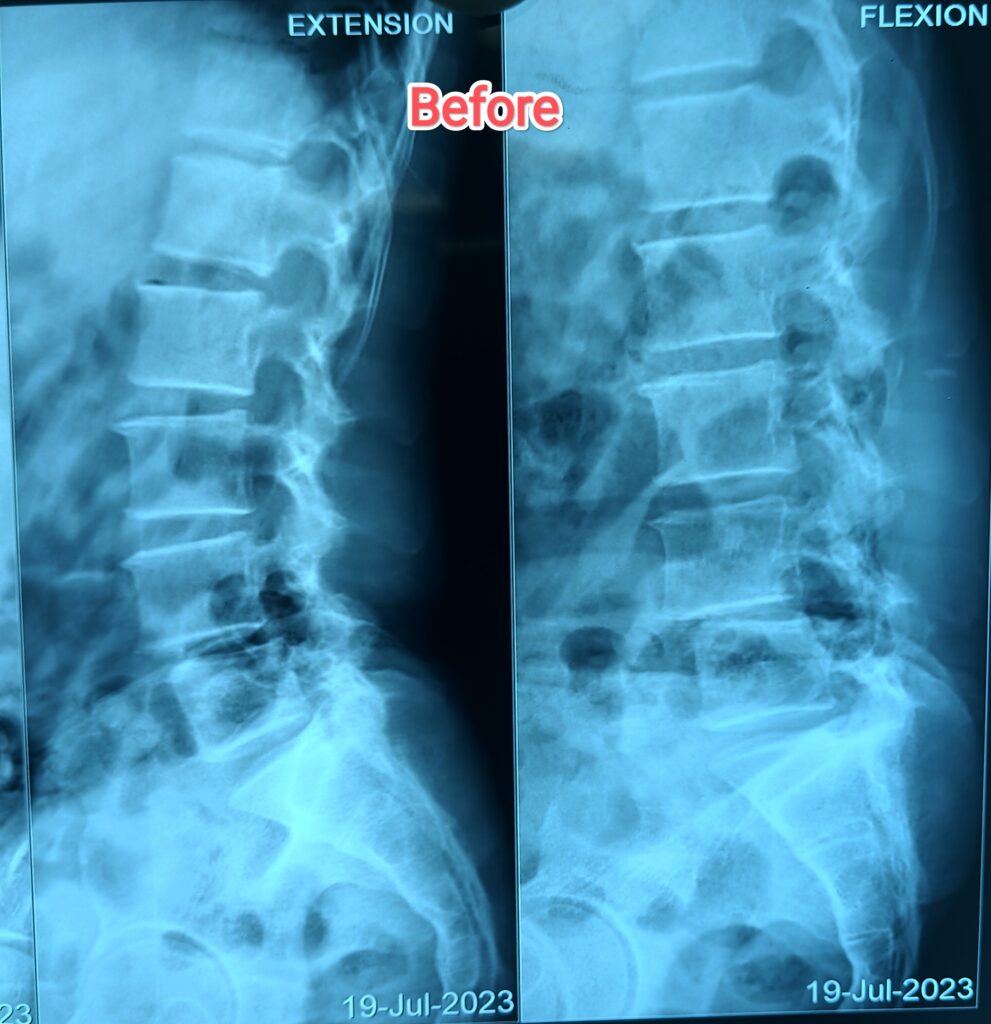
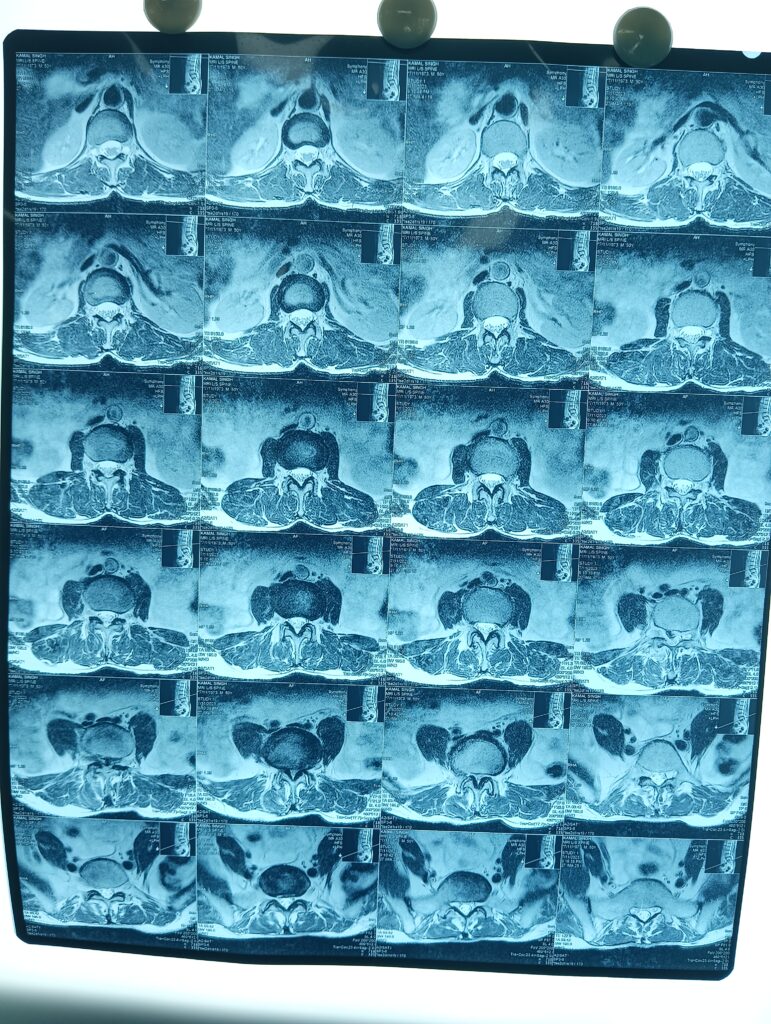
One patient came to us with severe low back pain lasting two years and neural claudication for a year and a half. He couldn’t walk more than 50 metres before his legs went numb, and he had started falling as a result. He had also begun having difficulty passing urine, a sign that nerve compression had progressed significantly.
His diagnosis: a lumbar disc prolapse, lumbar canal stenosis, and spondylolisthesis at L4-L5, meaning the vertebra was slipping and destabilising the spine around it. This combination, instability plus nerve compression, is exactly the scenario TLIF is designed for. He underwent Open TLIF surgery, and his mobility and nerve symptoms improved significantly afterward. If you’re at an earlier stage than this, dealing with disc-related pain but without instability or bladder symptoms yet, our Slip Disc Treatment in Indore page covers the conservative options worth trying first.
How the Procedure Works, In Plain Terms
Here’s the general sequence of an Open TLIF procedure, without the operating-room jargon. Not every patient needs an open approach. Some candidates are eligible for Minimally Invasive Spine Surgery in Indore, though this particular case required the traditional open technique because of how much instability was involved:
- Access: A small incision is made in the lower back to reach the affected disc level.
- Decompression: The damaged disc is removed, relieving pressure on the compressed nerve.
- Fusion: A bone graft is placed in the empty disc space to encourage the vertebrae to fuse over time.
- Stabilisation: Screws and a connecting rod are placed to hold the spine steady while fusion happens.
- Closure and recovery: The incision is closed, and patients are typically encouraged to start walking within a day or two.
What Recovery Actually Looks Like
Recovery from TLIF surgery happens in stages, and it’s worth knowing what to expect rather than assuming pain relief means you’re fully healed.
- First few days: Hospital monitoring and early walking to prevent complications
- First few weeks: Gradual return to daily activities, avoiding heavy lifting or twisting
- Months two to six: Physiotherapy to rebuild strength, alongside the fusion process continuing internally
- Long term: Most patients return to normal activity levels once fusion is confirmed on follow-up imaging
TLIF vs Conservative Treatment: How the Decision Is Made
TLIF is never the starting point. It’s considered only when specific criteria are met.
A spine specialist typically recommends TLIF when:
- Physiotherapy and medication haven’t relieved symptoms after a fair trial
- Imaging confirms structural instability, not just disc wear
- Nerve compression is causing progressive weakness or bladder symptoms
- Pain is significantly limiting daily function despite non-surgical care
If you’re earlier in this journey and haven’t yet exhausted non-surgical options, our back pain treatment page covers the full range of approaches that come before surgery is even discussed.
Frequently Asked Questions
1. Is TLIF surgery the same as spinal fusion?
TLIF is a specific type of spinal fusion surgery. It combines disc removal with fusion at that level, using a particular surgical approach through the side of the spinal canal.
2. How long does it take to recover from TLIF surgery?
Most patients start walking within a day or two, return to light activity within a few weeks, and reach fuller recovery over three to six months as fusion progresses.
3. Is TLIF surgery painful?
Post-surgical discomfort is managed with medication, and many patients report significant relief from their pre-surgery nerve pain almost immediately after the procedure.
4. Can spondylolisthesis be treated without surgery?
Mild cases are often managed with physiotherapy and activity modification. Surgery becomes relevant when there’s significant instability or nerve compression that hasn’t responded to conservative care.
5. What happens if TLIF surgery is delayed too long?
Prolonged nerve compression can lead to permanent weakness or nerve damage, which is why persistent leg symptoms or bladder changes should be evaluated promptly rather than managed indefinitely with pain relief alone.
6. Will I need physiotherapy after TLIF surgery?
Yes. Physiotherapy plays a central role in rebuilding strength and mobility during recovery and is typically part of the structured plan following surgery.
Final Word
TLIF surgery isn’t a first resort, but for the right patient, one dealing with genuine nerve compression and spinal instability, it can restore the ability to walk, stand, and live without constant pain. The key is getting an accurate diagnosis before assuming surgery is or isn’t the answer.
If you’ve been dealing with persistent back pain and leg symptoms that haven’t improved with conservative treatment, it’s worth finding out exactly what’s causing it. Consult Dr. Sandeep Moolchandani at Samarth Neuro Spine Centre for a clear, honest evaluation. Call +91-7000-11-5912 or book your appointment online today.