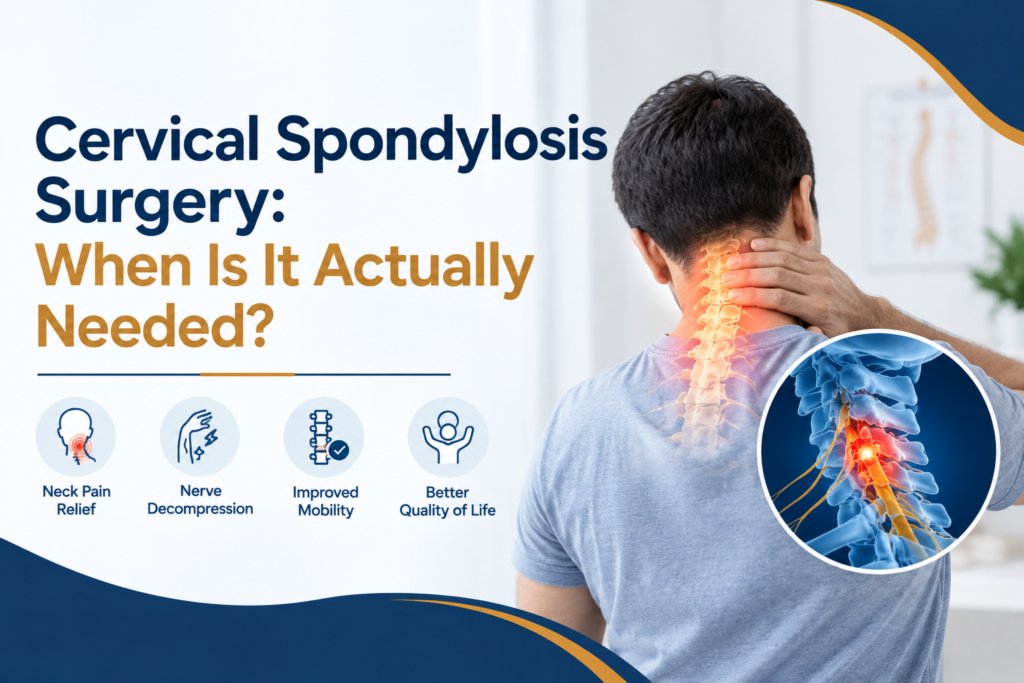
Cervical spondylosis surgery is usually only needed when the spinal cord or a nerve root in the neck is being compressed badly enough to cause worsening weakness, numbness, or loss of coordination, and non-surgical treatment hasn’t helped after a fair trial. Most people with cervical spondylosis, the general wear and tear of the neck’s discs and joints with age, never need an operation at all. The ones who do usually have very specific warning signs, not just a stiff or sore neck.
If you’ve been told you have cervical spondylosis and someone’s now mentioned surgery, it’s natural to want a straight answer on whether that’s actually necessary for you, or whether it’s being suggested too early. This is meant to give you that straight answer.
What Cervical Spondylosis Actually Is
As the discs and joints in the neck wear down with age, bone spurs can form and the space around the spinal nerves can narrow. For most people, this shows up as:
- Neck stiffness, worse in the morning
- A dull ache that sometimes spreads to the shoulder
- Occasional tingling in the arm or hand
- Symptoms that ease with rest, movement, or basic physiotherapy
This is the stage where cervical spine injury treatment rarely means surgery. It usually means physiotherapy, short-course medication, posture correction, and sometimes a targeted injection to calm nerve irritation down.
The Signs That Actually Point Toward Surgery
This is the part most general articles gloss over. Surgery isn’t considered because pain exists, it’s considered when specific neurological signs show up, signs that point to the spinal cord itself being affected, not just a nerve root:
- Weakness in the arms or legs that’s new or getting worse
- A clumsy, unsteady, or jerky walk, patients often describe it as feeling off-balance without knowing why
- Numbness in the hands that interferes with fine tasks like buttoning a shirt or writing
- Loss of bladder or bowel control, a genuine emergency sign, not something to monitor
- Reflexes that become exaggerated, something your doctor checks for on exam, not something you’d notice yourself
If even one or two of these are present alongside neck symptoms, that’s a different situation from ordinary neck stiffness, and it’s the point where a Neck Pain Specialist in Indore typically orders imaging to check exactly how much the spinal cord is being compressed.
Why “Try Everything Else First” Is the Right Default
Doctors don’t jump to surgery for cervical spondylosis, and for good reason. The standard approach is:
- Physiotherapy to build strength and flexibility around the neck
- Anti-inflammatory medication for a defined, short period
- A cervical epidural injection in select cases, when pain is radiating down the arm
- Activity and posture changes that reduce strain on the neck day to day
If these genuinely don’t help, or if imaging shows the spinal cord itself is being squeezed, that’s when the conversation shifts. This is also where Best Spine Surgeon in Indore searches tend to spike, people who’ve tried the conservative route and are now looking for someone to make the next call with confidence, not guesswork.
What Cervical Spondylosis Surgery Actually Involves
There isn’t one single surgery for this, the right procedure depends on exactly where the compression is and how many levels of the spine are affected. The common options include:
- Anterior cervical discectomy and fusion (ACDF): the worn disc is removed from the front of the neck and the space is stabilized
- Cervical disc replacement: in select cases, an artificial disc replaces the damaged one and preserves more natural neck movement than fusion
- Posterior foraminotomy: widens the nerve passage from the back of the neck to relieve pressure on a specific nerve root
- Laminectomy or laminoplasty: removes or reshapes part of the vertebra to give the spinal cord more room, used when compression involves the cord more broadly
Safe Spine Surgery in Indore decisions come down to matching the right procedure to the specific compression pattern on your scan, not applying the same operation to every patient. Recovery after any of these generally involves a short hospital stay, a period of activity modification, and physiotherapy to rebuild strength once healing allows.
What to Do If This Sounds Like You
If your neck symptoms are still limited to stiffness and occasional discomfort, that’s very much still in non-surgical territory, and getting that confirmed by an exam is worth doing before assuming the worst. If you’re noticing hand clumsiness, arm or leg weakness, or an unsteady walk alongside neck pain, that combination deserves a proper neurological evaluation soon, not a wait-and-see approach.
If your neck pain has also come with numbness running down the arm rather than these spinal cord signs, that’s a slightly different and usually less urgent pattern, one covered in more depth in Neck Pain With Arm Numbness? When Should You See a Spine Specialist?, which walks through that specific presentation and when it needs attention.
Frequently Asked Questions
1. Can cervical spondylosis be treated without surgery?
Yes, in most cases. Physical therapy, medication, and posture correction manage the majority of cervical spondylosis cases without ever needing an operation.
2. What happens if cervical spondylosis surgery is delayed too long?
If spinal cord compression is significant and surgery is delayed, neurological damage such as weakness or loss of coordination can become permanent even after the compression is later relieved, which is why the specific warning signs matter more than the pain level alone.
3. Is cervical spondylosis surgery a major operation?
It’s a significant procedure, but modern techniques like ACDF and posterior foraminotomy are well established, and most patients go home within a few days and return to normal activity over the following weeks with physiotherapy support.
4. Which type of surgery is best for cervical spondylosis?
There isn’t one universally “best” procedure. The right choice depends on where the compression is, how many spinal levels are affected, and your overall spine alignment, which is why imaging and a proper exam come before any recommendation.
5. Can cervical spondylosis come back after surgery?
The specific level that’s operated on is usually stabilized long term, though wear and tear can develop at a different level of the neck over time, which is why post-surgical follow-up and posture habits still matter.
6. How do I know if my neck pain needs a specialist instead of just resting?
If stiffness or discomfort persists beyond a couple of weeks, or if you notice any hand numbness, arm weakness, or balance changes, that’s the point to get it checked rather than continuing to rest and wait.
Get a Clear Answer, Not a Guess
If neck stiffness has turned into something more, hand clumsiness, arm weakness, or a change in how you walk, that combination deserves a proper evaluation, not more waiting. As a Nerve Pain Specialist in Indore, Samarth Neuro Spine Centre can help assess your symptoms and explain whether non-surgical treatment may be appropriate or whether further intervention needs to be considered. Call +91-7000-11-5912 to book a consultation and get a straight answer either way.