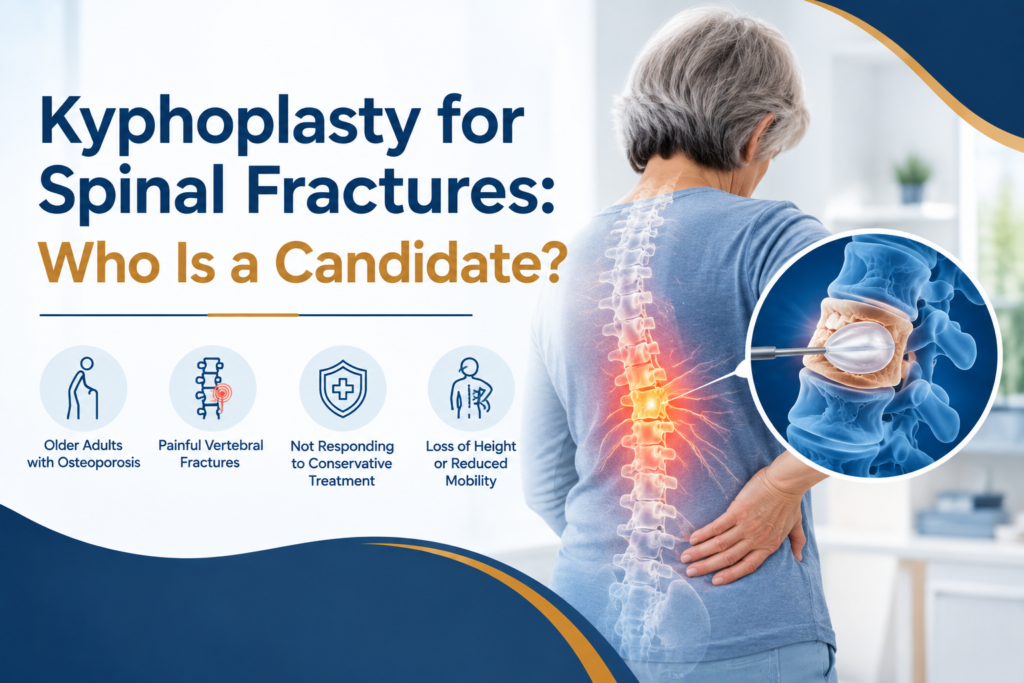
Kyphoplasty is generally recommended for patients with a painful, recent vertebral compression fracture, usually caused by osteoporosis or a fall, that hasn’t improved after a few weeks of rest, bracing, and medication. It is not the right option for every spinal fracture, older, already-healed fractures, fractures with nerve involvement, or those caused by infection are usually excluded. The best way to know if you’re a candidate is imaging that confirms the fracture is recent and active.
If you or a family member has been told about a compression fracture and kyphoplasty has come up as an option, the two questions that actually matter are whether the fracture is still fresh enough for the procedure to help, and whether anything about your specific case rules it out. This walks through both honestly.
What Kyphoplasty Actually Is
A vertebral compression fracture happens when a bone in the spine collapses, usually from weakened bone density or a fall, creating a wedge shape instead of its normal rectangular one. Kyphoplasty is a minimally invasive procedure where a small balloon is inserted into the collapsed vertebra and inflated to restore some of the lost height, then the cavity is filled with a specialized bone cement to stabilize it. It’s done through a small incision, without open surgery, and most patients go home the same day or after a short stay.
Who Is Actually a Good Candidate
This is the part worth getting right, since not every compression fracture needs or benefits from the procedure:
- The fracture is recent and active. MRI typically shows bone marrow edema, a sign the fracture is still fresh, usually within a few weeks to a couple of months. Old, healed fractures don’t respond the same way.
- Pain hasn’t improved with conservative treatment. Rest, a back brace, and pain medication are usually tried first. When pain persists significantly after several weeks, that’s when the procedure is reconsidered.
- The fracture is causing a loss of vertebral height. This is specifically where kyphoplasty has an advantage over its older alternative, vertebroplasty, it can restore some height and correct the spine’s alignment rather than just stabilizing the bone in its collapsed position.
- There’s no infection or bleeding disorder present. Both are contraindications that rule out the procedure regardless of how the fracture looks on imaging.
- There’s no nerve or spinal cord compression requiring decompression. If the fracture is pressing on a nerve or the spinal cord, a more involved surgical approach is usually needed instead.
Vertebral Injury Treatment decisions like this one shouldn’t be made from the fracture alone, timing, cause, and whether nerves are involved all shape whether kyphoplasty is genuinely the right next step.
Kyphoplasty vs Vertebroplasty: What’s Actually Different
Both procedures treat the same problem, stabilizing a painful compression fracture with bone cement, but they aren’t identical:
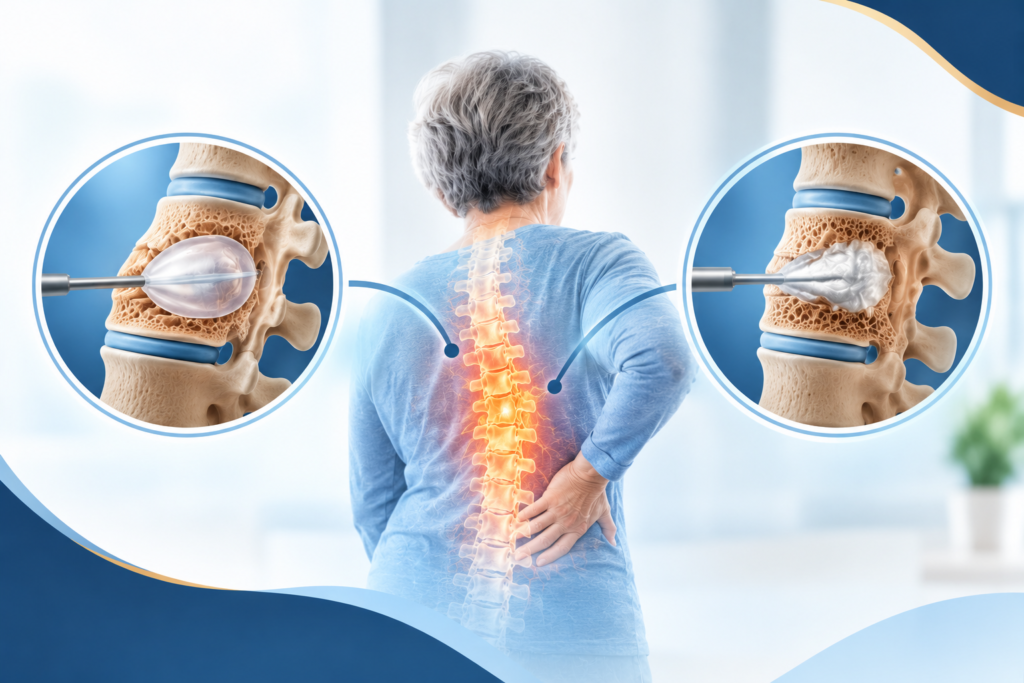
- Kyphoplasty uses a balloon to create space and restore height before the cement is placed, and tends to have a lower risk of cement leaking outside the vertebra.
- Vertebroplasty injects cement directly without the balloon step, it’s a slightly simpler procedure but doesn’t restore height the way kyphoplasty can.
Recent long-term research has also found each has its own trade-offs, kyphoplasty showed a somewhat higher chance of a new fracture in a neighboring vertebra within a year, while vertebroplasty was linked to more short-term neurological complications. Neither is simply “better” across the board, which is exactly why this decision benefits from a proper in-person evaluation rather than a general answer.
When It’s Time to Get Evaluated
A Spine Injury Treatment in Indore consultation is worth getting sooner rather than later if you notice:
- New back pain following a fall, even a minor one, especially in someone over 60
- Back pain that worsens with standing or walking and eases lying down
- A visible change in posture or height loss over a short period
- Pain that hasn’t meaningfully improved after two to three weeks of rest and medication
- A known diagnosis of osteoporosis with new-onset back pain
Waiting too long doesn’t just prolong pain, an untreated compression fracture can worsen, and multiple fractures over time can lead to a stooped, forward-curved spine that’s harder to correct later.
When Kyphoplasty Isn’t the Right Fit
Some cases need a different approach entirely. If imaging shows the fracture is compressing the spinal cord or causing significant instability, a Spinal Cord Injury Doctor in Indore may recommend a more involved surgical procedure instead of a minimally invasive one. This is also the case with certain fractures caused by tumors or infection, where treating the underlying cause has to come first.
If you’re weighing a surgical recommendation at all and want another set of eyes on it before deciding, Do You Really Need a Second Opinion Before Spine Surgery? covers when that extra step is genuinely worth the time.
What Recovery Looks Like
Recovery from kyphoplasty is generally faster than open spine surgery, since there’s no large incision or extended hospital stay involved:
- Most patients notice pain relief within a day or two, sometimes sooner
- Light activity typically resumes within a few days, with heavier lifting restricted for a few weeks
- Ongoing osteoporosis management is usually recommended afterward, since the underlying bone weakness that caused the fracture doesn’t go away with the procedure itself
Finding the Right Spine Injury Specialist
A Spine Injury Specialist in Indore evaluating a compression fracture should be looking at more than the fracture itself, your bone density history, fall risk, and whether osteoporosis treatment is already in place all shape the full picture, not just whether the procedure can technically be done.

As a Brain & Spine Specialist in Indore, Samarth Neuro Spine Centre evaluates each fracture individually rather than offering the same procedure to every patient who walks in with one.
Frequently Asked Questions
1. How do I know if my compression fracture is recent enough for kyphoplasty?
An MRI showing bone marrow edema confirms the fracture is still active, usually within a window of a few weeks to a couple of months. Your specialist will use imaging, not just how long ago you noticed symptoms, to determine this.
2. Is kyphoplasty safer than open spine surgery?
It’s less invasive with a shorter recovery, but it isn’t risk-free, and it isn’t appropriate for every fracture. Cases involving nerve compression or spinal instability usually need a different surgical approach.
3. Does kyphoplasty fix osteoporosis?
No. It treats the fracture itself, not the underlying bone weakness. Ongoing osteoporosis management, including medication and bone health monitoring, is usually still needed afterward.
4. How long does the kyphoplasty procedure take?
It typically takes about an hour per fractured vertebra, and most patients go home the same day or after a short observation period.
5. Can kyphoplasty be done on more than one fracture at once?
Yes, when imaging shows multiple active fractures, more than one level can sometimes be treated in the same procedure, depending on the specific case.
6. What happens if I don’t treat a compression fracture at all?
Pain can persist for months, and the fracture may worsen or lead to further height loss. Multiple untreated fractures over time can contribute to a permanently stooped posture that’s harder to address later.
Get an Honest Evaluation
A compression fracture that isn’t improving with rest deserves a proper evaluation, not continued guessing. If you’re searching for a Spine Surgeon Near Me, call Samarth Neuro Spine Centre at +91-7000-11-5912 to find out whether kyphoplasty, a different approach, or continued conservative care is the right fit for your specific fracture.