
Brain aneurysm surgery is needed when an aneurysm has ruptured, is at high risk of rupturing, or is causing symptoms from pressure on nearby brain tissue or nerves. Not every aneurysm needs immediate surgery, small, unruptured ones are sometimes monitored instead. The right decision depends on the aneurysm’s size, location, and your overall health, not just the fact that one was found on a scan.
Finding out you or a family member has a brain aneurysm is frightening, and the first instinct is usually to search for the fastest possible answer, will this need an operation, how urgent is it, and what will it actually cost. This is meant to walk through that honestly, and to help you know when it’s genuinely time to get an opinion from the Best Neurosurgeon in Indore you can reach, rather than sitting with the uncertainty.
What a Brain Aneurysm Actually Is
An aneurysm is a weak, bulging spot in a blood vessel wall in the brain, similar to a thin spot in a balloon that could stretch further under pressure. Most aneurysms cause no symptoms and are found by accident during a scan done for something else. The danger is rupture, when the weak spot bursts and causes bleeding around the brain, a genuine medical emergency.
When Surgery Is Actually Recommended
This is the part that matters most, and it’s not a blanket rule. Surgery or a procedural intervention is generally recommended when:
- The aneurysm has already ruptured. This is an emergency regardless of size, and treatment happens as fast as possible to stop further bleeding.
- The aneurysm is large or growing. Size and growth over time on repeat scans raise rupture risk significantly.
- It’s causing symptoms. Pressure on a nearby nerve can cause a drooping eyelid, double vision, or localized pain, even without rupture.
- It’s in a high-risk location or shape. Certain positions and irregular shapes carry higher rupture risk than others of similar size.
- There’s a personal or family history of rupture. This shifts the risk calculation even for a smaller aneurysm.
Cerebral Aneurysm Surgery in Indore decisions, when the aneurysm hasn’t ruptured, usually follow a period of monitoring with repeat imaging first, not an automatic recommendation to operate the moment one is found.
Clipping vs Coiling: The Two Main Approaches
There isn’t one single “aneurysm surgery.” Two main techniques are used, and the choice depends on the aneurysm’s shape, location, and your overall health:
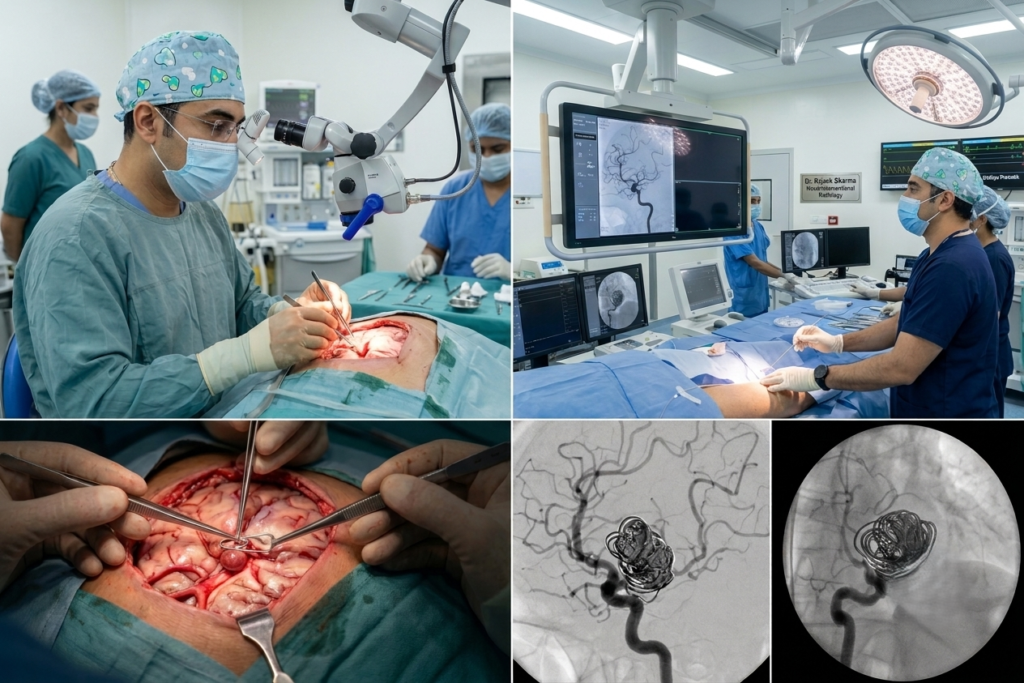
- Surgical clipping: an open procedure where a small metal clip is placed at the base of the aneurysm to seal it off from blood flow. This has been the standard approach for decades and works well for a wide range of aneurysm shapes.
- Endovascular coiling: a minimally invasive procedure done through a catheter, usually entered through the leg, that fills the aneurysm with tiny coils to block blood flow without opening the skull. Recovery is generally faster, though not every aneurysm shape is suitable for it.
What Actually Affects the Cost
This is worth understanding honestly rather than guessing at a number. The real cost drivers are:
- Which technique is used: Clipping and coiling have different cost structures, coiling often involves more expensive implant materials, while clipping can mean a longer hospital stay.
- Ruptured vs unruptured: A ruptured aneurysm almost always means ICU care, closely monitored recovery, and a longer admission, all of which add to the total cost.
- Aneurysm size and complexity: Larger or harder-to-reach aneurysms generally mean longer procedure time and more intensive post-operative monitoring.
- Length of hospital stay: This is one of the biggest cost variables, and it depends heavily on whether complications occur during recovery.
- Insurance coverage: Policy terms, network hospitals, and pre-existing condition clauses all affect what you actually pay out of pocket.
Because these factors vary so much case to case, an honest estimate can only come after imaging and a proper evaluation, not from a number quoted online without seeing your specific case.
Recognizing a Ruptured Aneurysm
A ruptured aneurysm is a medical emergency, and recognizing it fast genuinely changes outcomes. The classic sign is a sudden, severe headache unlike anything experienced before, often described as the worst headache of a person’s life. This pattern is covered in more depth in Sudden Severe Headache: Is It a Brain Emergency?, which walks through the full list of warning signs and what to do immediately.
Choosing the Right Surgeon for Aneurysm Care
Aneurysm surgery is technically demanding, and outcomes are closely tied to the surgeon’s specific experience with both clipping and coiling techniques, not just general neurosurgery experience. Look for:
- Direct experience with both surgical clipping and endovascular coiling, since the right choice depends on your specific case
- A hospital with proper neuro-ICU support for post-operative monitoring
- Clear communication about whether surgery is genuinely needed now, or whether monitoring is a reasonable option first
A Best Neurosurgeon for Aneurysm Surgery Near Me search usually comes from people who already have a diagnosis and are trying to move fast, which is understandable, but it’s still worth confirming the surgeon’s specific aneurysm experience rather than choosing on proximity alone.
Where to Get Evaluated in Indore

If you’ve been told you have a brain aneurysm, or you’re experiencing symptoms and searching for a Neuro Doctor in Indore, a proper neurological evaluation is the first step, not a scheduling decision to put off. Samarth Neuro Spine Centre and Shalby Hospital both offer neurosurgical consultation for aneurysm cases, with access to imaging and, when needed, coordinated surgical care.
Frequently Asked Questions
1. Does every brain aneurysm need surgery?
No. Small, unruptured aneurysms with low rupture risk are often monitored with repeat imaging rather than operated on immediately. Surgery becomes the recommendation when risk factors like size, growth, symptoms, or rupture are present.
2. Which is safer, clipping or coiling?
Neither is universally safer, the right choice depends on the aneurysm’s shape, location, and the patient’s overall health. Coiling is less invasive and often has a faster recovery, but not every aneurysm is suitable for it.
3. How urgent is surgery for a ruptured aneurysm?
Extremely urgent. A ruptured aneurysm is treated as a medical emergency, and treatment typically begins as soon as possible after diagnosis to prevent further bleeding.
4. What determines the cost of brain aneurysm surgery?
The technique used, whether the aneurysm ruptured, the length of hospital and ICU stay, case complexity, and insurance coverage all factor in. An accurate estimate requires an actual evaluation and imaging.
5. Can a brain aneurysm be treated without surgery?
Small, low-risk unruptured aneurysms are sometimes managed with monitoring and blood pressure control rather than immediate intervention, based on a specialist’s assessment of rupture risk.
6. How long is recovery after brain aneurysm surgery?
Recovery varies by technique and whether the aneurysm had ruptured, coiling generally allows a faster return to normal activity than open clipping, though individual recovery timelines depend on the specific case.
Get a Clear, Honest Evaluation
A brain aneurysm diagnosis doesn’t automatically mean immediate surgery, but it does mean you need a proper evaluation to know where you actually stand. Call Samarth Neuro Spine Centre at +91-7000-11-5912 to book a consultation and get clarity on your specific case.