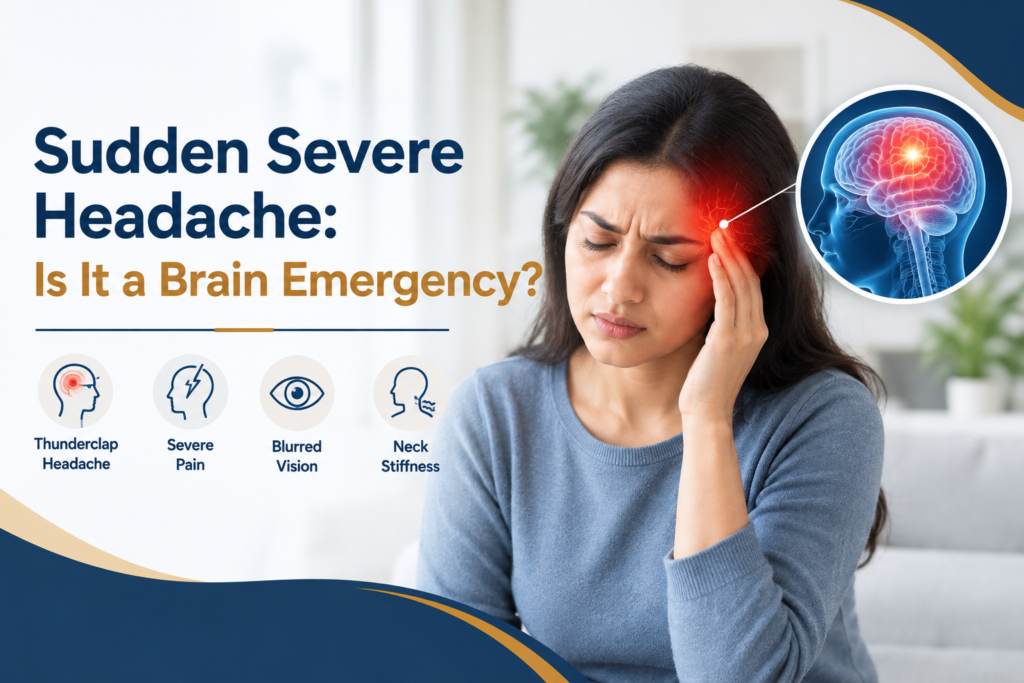
A sudden, severe headache that feels completely different from any headache you’ve had before can be a sign of a brain emergency, such as a brain hemorrhage, and needs urgent medical attention. Most headaches are harmless and linked to stress, dehydration, or lack of sleep. But a headache that hits suddenly, peaks within seconds to minutes, and comes with other symptoms is a different situation entirely, and it’s not one to wait out.
Doctors sometimes call this a “thunderclap headache” because of how abruptly it strikes. The reason it’s taken seriously is what it can point to: bleeding in or around the brain, which needs to be identified and treated fast to prevent lasting damage.
What Causes a Brain Emergency Like This
A brain hemorrhage happens when a blood vessel in the brain weakens and bursts, causing bleeding into or around brain tissue. As blood accumulates, pressure builds inside the skull and begins to interfere with normal brain function. Common contributors include:
- Long-standing high blood pressure that weakens vessel walls over time
- A head injury, even one that seemed minor at the time
- An aneurysm, a weak, bulging spot in a blood vessel that ruptures
- Blood-thinning medications that increase bleeding risk if a vessel is already fragile
Warning Signs You Should Never Ignore
A Headache Specialist in Indore will always ask about these specific symptoms first, because their presence changes a routine headache visit into an emergency one:
- A headache that reaches maximum intensity within seconds, unlike your usual headaches
- Numbness or weakness on one side of the face, arm, or leg
- Sudden difficulty speaking or understanding speech
- Sudden vision changes, blurring, or loss of vision
- Loss of balance or coordination
- Confusion or a noticeable change in alertness
If even one or two of these show up alongside a severe headache, that’s not something to monitor at home. It needs emergency evaluation right away.
Why Speed Matters So Much Here
With a brain emergency, every hour of delay increases the risk of permanent damage. Brain Stroke Treatment in Indore and hemorrhage care both work on the same principle: the faster bleeding or pressure is identified and managed, the better the chances of a full recovery. Delayed care allows pressure to build further, which can damage brain tissue that a faster response might have protected.
This is also why Emergency Stroke Care Near Me Indore searches spike during these situations, people instinctively know that this isn’t something to schedule for next week. It’s worth having that information ready before you need it, not while you’re panicking at the moment.
What to Do If You or Someone Else Has These Symptoms
- Call for emergency help or get to the nearest hospital with neurology and neurosurgery capability immediately
- Don’t drive yourself if you’re experiencing weakness, confusion, or vision changes
- Note the exact time symptoms started, this detail matters a lot for treatment decisions
- Don’t take pain medication and wait to “see if it passes”, especially with any of the warning signs above
If the emergency involves a head injury specifically rather than a spontaneous headache, Head Injury First Aid: What to Do in the First Few Minutes covers the immediate steps to take before help arrives, which is worth knowing separately from headache-related emergencies.
After the Emergency: What Recovery Looks Like
Once the immediate danger is managed, recovery depends heavily on how quickly treatment started and the extent of the bleeding. Patients often need a period of monitoring, followed by rehabilitation support if there was any impact on movement, speech, or coordination. Regular follow-up with a specialist helps catch any complications early and supports a fuller recovery.
Frequently Asked Questions
1. What does “worst headache of my life” actually mean to a doctor?
It’s a specific clinical red flag, a headache that is clearly, dramatically worse than any headache you’ve had before, and doctors take that description seriously regardless of your age or health history.
2. Can a brain hemorrhage happen without any warning beforehand?
Yes, in many cases there’s no warning at all until the sudden headache itself, which is why recognizing the pattern matters so much.
3. Can a thunderclap headache happen during exercise or exertion?
Yes, sudden severe headaches can be triggered by heavy physical activity, and any headache appearing this way still needs urgent evaluation to rule out a dangerous cause.
4. Is every sudden headache a brain emergency?
No, but any headache that’s sudden, severe, and unlike your usual pattern should be evaluated urgently rather than assumed harmless.
5. What tests diagnose a brain hemorrhage?
A CT scan is usually first, since it quickly detects bleeding, sometimes followed by an MRI or further imaging depending on the results.
6. Can young, healthy people have a brain hemorrhage too?
Yes. While high blood pressure is common in older adults, aneurysms and vascular abnormalities can affect younger, otherwise healthy people as well.
If This Sounds Like What You’re Experiencing, Act Now
A sudden, severe headache unlike anything you’ve felt before is not something to wait on. If you or someone near you is experiencing these warning signs, seek emergency care immediately, and for follow-up neurological care, Samarth Neuro Spine Centre can be reached at +91-7000-11-5912.