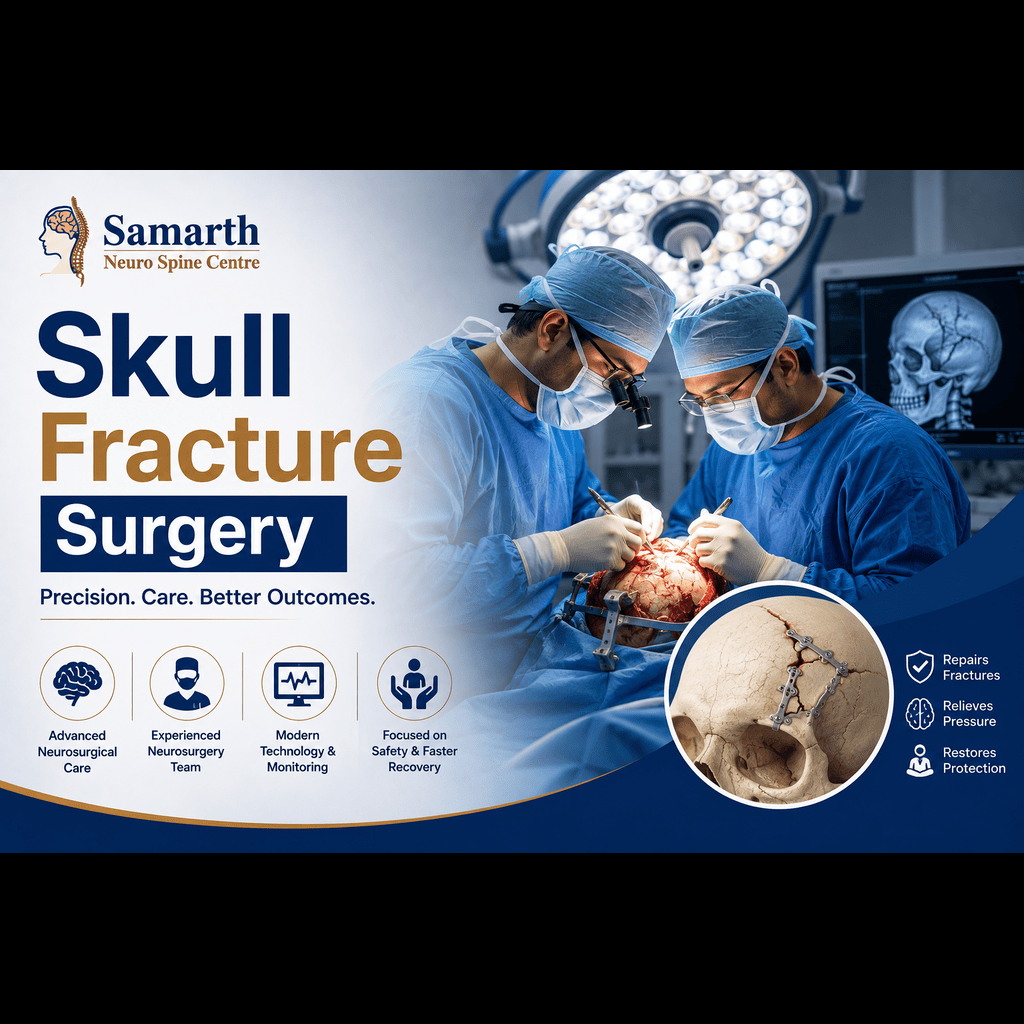
Some skull fractures are dangerous simply because of where they happen, not just how severe the impact was. A midline depressed skull fracture sits directly over the superior sagittal sinus, a major vein that drains blood from the brain, which makes surgery in that exact spot one of the riskiest procedures in neurosurgery. This is the real case of a 22-year-old patient treated at Samarth Neuro Spine Centre, operated on the night of Diwali.
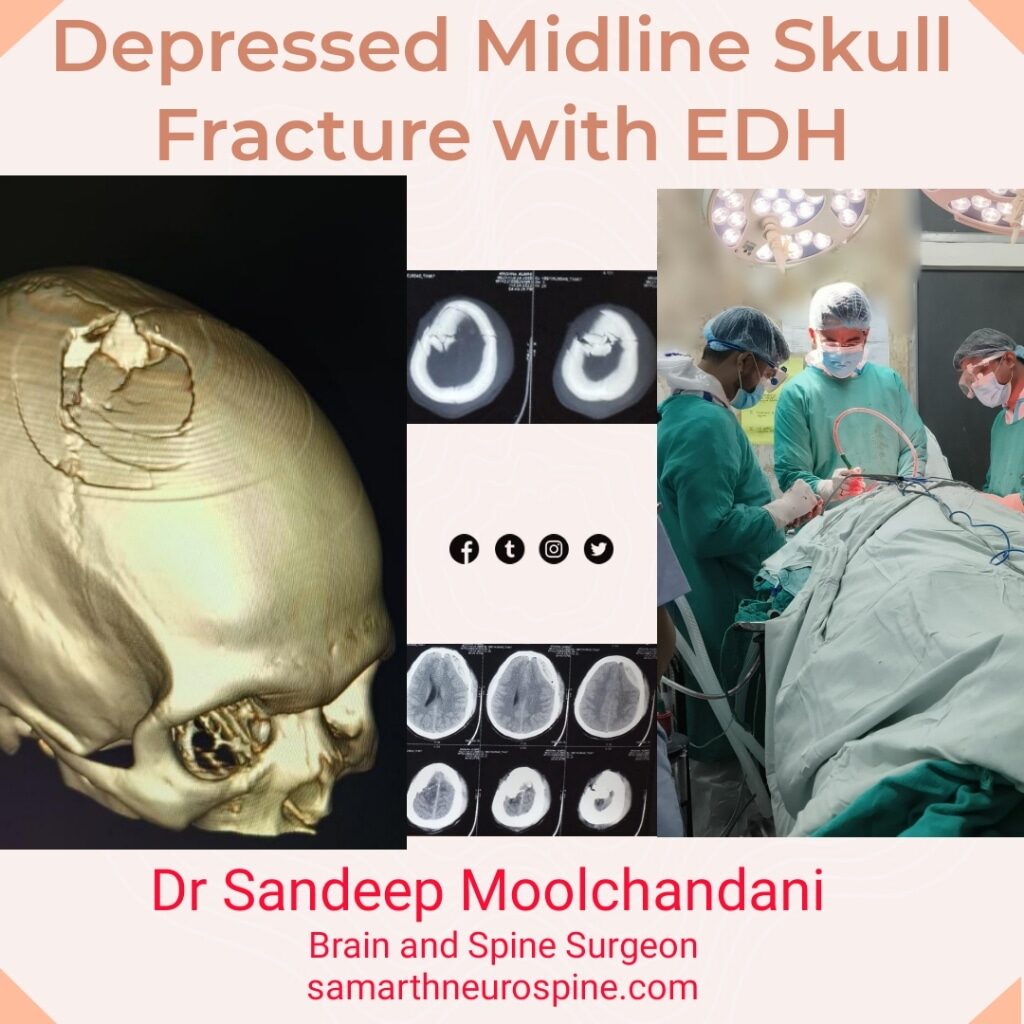
22y/M with H/O High speed RTA due to skidding of bike with H/o LOC(+), VOMITING(+) , CONVULSION(+) /ENT BLEED(-)
Why the Superior Sagittal Sinus Makes Surgery So Risky
The superior sagittal sinus runs along the midline of the skull, directly beneath the bone that was fractured in this case. It’s not a typical blood vessel, it’s a large venous channel that collects blood from across the brain’s surface and drains it back toward the heart. Because it carries a high volume of blood at low pressure, any tear in its wall can bleed rapidly and be difficult to control, especially when the surgical field is already complicated by a depressed, compound fracture sitting right on top of it. This is one reason why choosing the Best Doctor for Head Injury in Indore involves looking for experience with complex cranial trauma and the risks associated with injuries near major venous structures.
This is why surgeons treating this type of fracture prepare differently than they would for a routine skull fracture elsewhere on the head. Blood needs to be readily available, the surgical approach has to account for the possibility of sudden bleeding, and the team has to be ready to respond within seconds if the sinus is disturbed during bone elevation.
What Happened
The patient arrived after a high-speed road accident, having skidded off his bike. He had lost consciousness, was vomiting, and had a convulsion on the way in. Imaging showed a compound midline depressed skull fracture, a rare injury most often seen in high-velocity accidents, along with an epidural hematoma, a build-up of blood between the skull and the brain’s outer lining that needed urgent removal.
Why this particular fracture is so difficult to treat:
- The fracture sat directly over the superior sagittal sinus, the brain’s main venous drainage channel
- Elevating the depressed bone carries a real risk of tearing that vein
- A tear in this location can cause massive, rapid blood loss during surgery
- The surgical team has to work with precision while staying prepared for sudden bleeding at any moment
The Surgery
Operating near the superior sagittal sinus means there is very little room for error. The surgical team elevated the depressed fracture and addressed the epidural hematoma while managing this bleeding risk throughout the procedure, on the night of Diwali, with the patient’s condition requiring immediate rather than scheduled surgery.
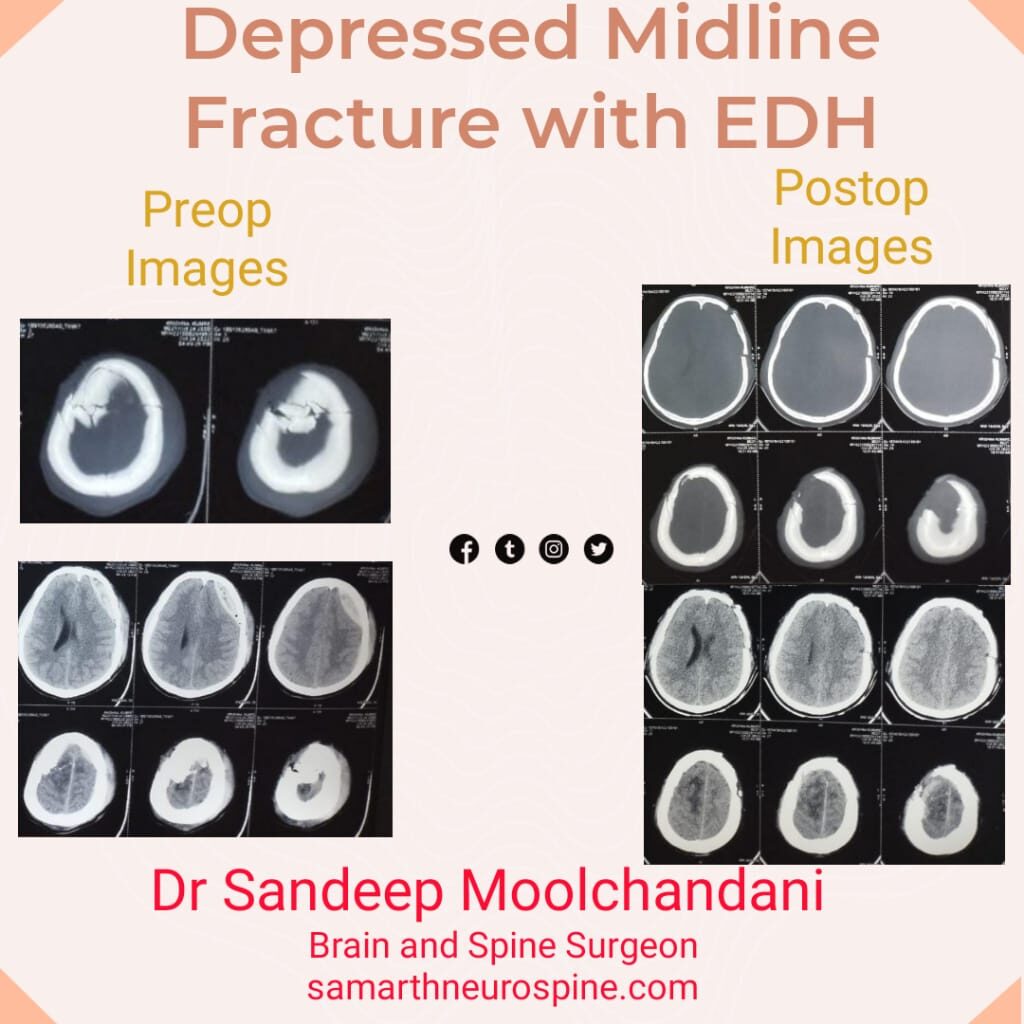
Preoperative to postoperative improvement:
- Preoperative Glasgow Coma Scale response was significantly reduced, reflecting the severity of the injury
- Postoperative assessment showed clear improvement in responsiveness and pupil reaction
The patient came through the procedure with limited blood loss, despite the inherent risk of the surgical site.
Why This Case Is Different from a Typical Head Injury
Most head injuries, even serious ones, don’t involve this specific combination of a structural bone fracture directly over a major blood vessel. This is what separates routine Head Injury Treatment in Indore from the more complex cases that require a surgeon experienced specifically in high-risk neurotrauma.
If you’re looking to understand the fuller range of what falls under head injury care, from the most urgent cases to the everyday ones, our guide on head injury first aid covers what to do and when to seek help immediately, regardless of how severe the injury turns out to be.
What Made the Difference
- Immediate imaging that correctly identified both the fracture and the epidural hematoma
- A surgical team prepared for a high-bleeding-risk procedure, not just a standard fracture repair
- Willingness to operate immediately rather than delay for a more convenient time
A Brain Doctor in Indore equipped to handle this level of surgical complexity is what turned a potentially fatal combination of injuries into a manageable, successfully treated case.
Frequently Asked Questions
1. What makes a midline skull fracture more dangerous than other skull fractures?
Its location directly over the superior sagittal sinus, a major vein draining blood from the brain, makes surgical correction significantly riskier due to the potential for serious bleeding.
2. What is an epidural hematoma?
It’s a collection of blood between the skull and the brain’s outer membrane, usually from a torn blood vessel after head trauma. It often requires urgent surgery to relieve pressure on the brain.
3. How common are midline depressed skull fractures?
They are rare, typically occurring in high-velocity injuries like road traffic accidents or severe falls.
4. Can this type of fracture be treated without surgery?
Given the depression of bone and pressure on the brain, along with the presence of the epidural hematoma in this case, surgical intervention was necessary. Treatment approach always depends on the specific fracture and imaging findings.
5. Why did the surgery happen at night instead of waiting until morning?
An epidural hematoma pressing on the brain is a time-sensitive emergency. Delaying surgery to wait for daytime hours would have increased the risk of permanent brain damage, so the team operated as soon as the patient was stable enough for surgery.
6. What happens if a skull fracture over the superior sagittal sinus isn’t treated promptly?
Continued pressure from the fracture and the associated bleeding can worsen brain injury over time, and the risk of uncontrolled bleeding during any eventual surgery tends to increase the longer treatment is delayed.
Final Word
This case is a reminder that not all head injuries are equal in complexity, and having a surgical team capable of handling the most technically demanding cases matters just as much as speed of treatment. It’s exactly the kind of case that shows why a Head Injury Doctor Near Me Indore search should lead you to a team with real surgical depth, not just general availability. Families researching the Best Doctor for Head Injury in Indore are often looking for precisely this level of experience with complex, high-risk trauma.
For urgent evaluation of any head injury, call Samarth Neuro Spine Centre at +91-7000-11-5912.