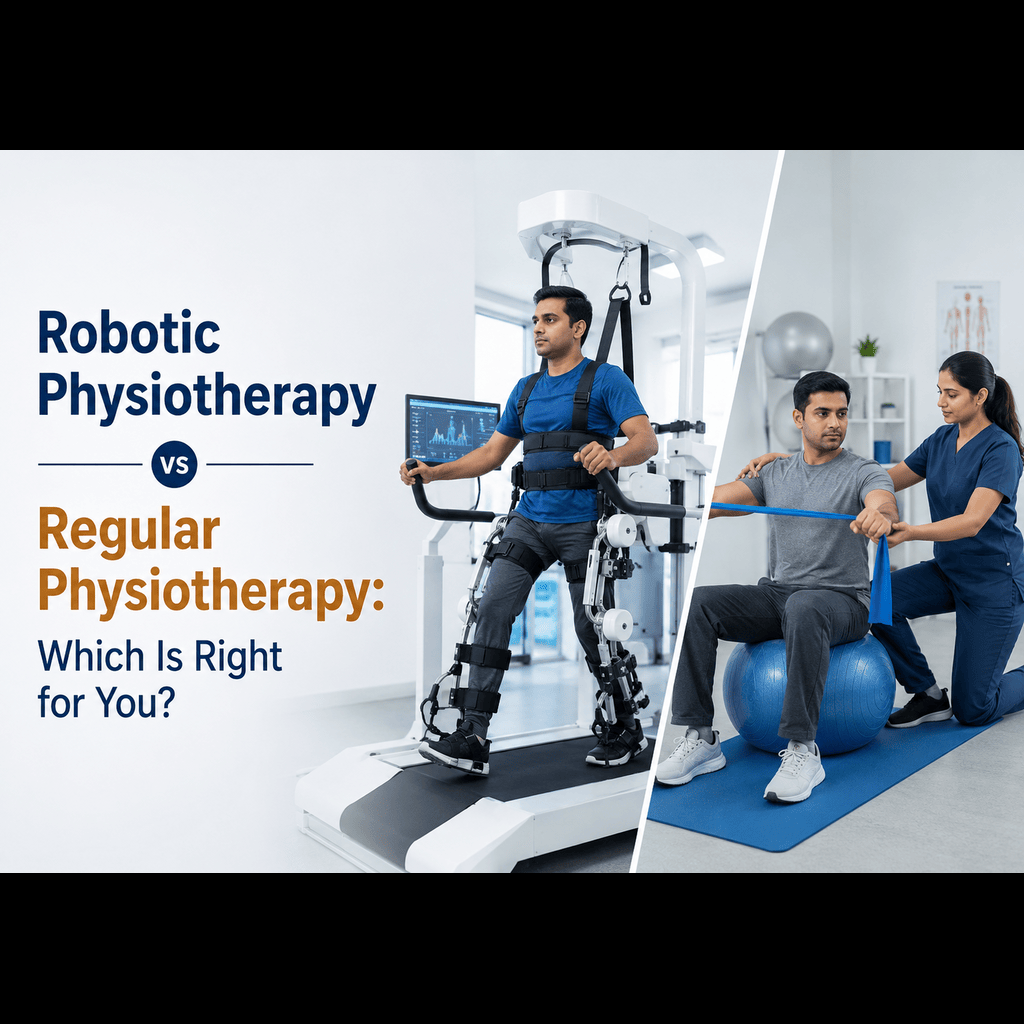
Robotic physiotherapy uses machine-assisted devices to deliver precise, repeatable movement patterns and track your progress with data, while regular physiotherapy relies on a therapist’s hands-on judgment and manual technique. Neither is universally better, the right choice depends on your specific condition, how you’ve responded to treatment so far, and what your recovery actually needs at this stage. This article breaks down exactly when each approach makes sense.
Most people searching for Robotic Physiotherapy in Indore aren’t choosing between two competing philosophies, they’re trying to figure out whether the added technology is worth it for their specific recovery, or whether a good therapist’s hands are enough. That’s a fair question, and the honest answer is that it depends less on which sounds more advanced and more on what your body is actually doing right now.
What Regular Physiotherapy Actually Involves
Traditional physiotherapy is built around a trained therapist assessing your movement, strength, and pain patterns, then guiding you through exercises by hand. It’s flexible, responsive, and adjusts in real time based on what the therapist sees and feels during your session.
Regular physiotherapy tends to work well for:
- Straightforward muscle strains and post-surgical recovery
- Patients who respond predictably to a standard progression of exercises
- Cases where a therapist’s hands-on feedback during the movement itself matters more than precise measurement
- Shorter-term recovery goals with clear, steady improvement
What Robotic Physiotherapy Adds
Robotic-assisted rehabilitation uses devices that guide your limbs through exact, repeatable movement patterns while tracking data like range of motion, force, and consistency across every session. It doesn’t replace a therapist, it works alongside one, giving both of you a clearer, more measurable picture of progress than manual therapy alone typically provides.
Robotic physiotherapy tends to make the biggest difference when:
- Progress on standard physiotherapy has plateaued and isn’t moving forward
- Recovery involves relearning a specific, repetitive movement pattern, like walking after a neurological injury
- You need objective, trackable data to know whether a treatment plan is actually working, not just a general sense of improvement
- The condition is complex enough that small, precise repetition matters more than general strengthening
One area where this distinction matters most is neurological rehabilitation, recovery after a stroke or spinal cord injury, where the brain and nervous system are essentially relearning a movement, not just rebuilding muscle. In these cases, the precise, repeatable input from robotic-assisted therapy can support the kind of neural retraining that general exercise alone doesn’t always achieve, and care is often coordinated between the treating neurosurgeon or a Best Neurologist Doctor in Indore and the physiotherapy team, rather than handled in isolation.
Robotic vs Regular Physiotherapy: The Real Differences
Precision and tracking
Regular physiotherapy relies on a therapist’s trained eye and touch. Robotic physiotherapy adds objective measurement, exact range of motion, resistance, and repetition counts, so progress isn’t just a general impression.
Consistency across sessions
A robotic device performs the same movement the same way every time. A human therapist, however skilled, has natural variation session to session. For conditions where exact repetition matters, that consistency can matter too.
Cost
Robotic physiotherapy sessions typically cost more than regular physiotherapy, given the equipment and technology involved. This is often the real deciding factor for patients, not which one “works better” in the abstract.
Best fit
Regular physiotherapy suits general strengthening, mobility, and straightforward recovery. Robotic physiotherapy suits complex, plateaued, or neurologically driven recovery where precision and data genuinely change the outcome.
Is Robotic Physiotherapy Worth the Extra Cost?
This is the question most patients are actually asking, even when they phrase it as “which is better.” The honest answer: it depends on where you are in recovery, not on which technology sounds more impressive.
Robotic physiotherapy is usually worth the added cost when:
- You’ve genuinely plateaued on regular physiotherapy for several weeks with no further improvement
- Your recovery involves a complex or neurological movement pattern, not general strength or mobility
- You want objective data to confirm a treatment plan is working, particularly for a long, uncertain recovery
- Your treating doctor has specifically recommended it based on your case, not as a default upgrade
Regular physiotherapy is usually the right starting point when:
- You’re early in a straightforward recovery
- Progress is already steady without added technology
- Cost is a genuine constraint and the condition doesn’t specifically call for precision tracking
Samarth Neuro Spine Centre offers Robotic Physiotherapy for patients whose recovery genuinely calls for it, guided by Best Physiotherapists in Indore who assess whether the added precision will actually change your outcome before recommending it, rather than presenting it as an upgrade everyone should choose by default.
If you’re recovering from a spinal cord injury specifically, our piece on what real recovery looks like after spinal cord injury goes deeper into exactly where robotic-assisted rehab fits into that specific recovery timeline.
How to Decide Which One Fits You
- Ask your treating doctor whether your condition is one where precision and repeatability genuinely change outcomes, or one where general strengthening is enough
- If you’ve been doing regular physiotherapy for four to six weeks with no progress, ask specifically whether robotic-assisted therapy could help you move past the plateau
- Don’t assume “more advanced” automatically means “more necessary” for your case
- A Best Robotic Physiotherapist Near me in Indore search is worth doing specifically once you know your case actually needs it, not as the first step before trying regular therapy
Frequently Asked Questions
1. Is robotic physiotherapy better than regular physiotherapy?
Not universally. It’s better for specific situations, plateaued recovery, complex neurological rehab, cases needing precise tracking, but regular physiotherapy is often equally effective and more cost-efficient for straightforward recovery.
2. How much more does robotic physiotherapy cost compared to regular physiotherapy?
Costs vary by facility and the specific device used, but robotic-assisted sessions generally cost more than manual physiotherapy sessions due to the equipment involved. It’s worth discussing the specific cost difference directly with your treatment team before starting.
3. Can I switch from regular physiotherapy to robotic physiotherapy partway through recovery?
Yes. Many patients start with regular physiotherapy and move to robotic-assisted therapy specifically if progress plateaus or the recovery proves more complex than initially expected.
4. Is robotic physiotherapy only for stroke or spinal cord injury patients?
No, though neurological recovery is where it often makes the clearest difference. It can also help with certain orthopedic and complex musculoskeletal recoveries where precise, repeatable movement matters.
5. Do I need a doctor’s recommendation before starting robotic physiotherapy?
It’s strongly advisable. A treating doctor or physiotherapist can assess whether your specific condition will actually benefit from the added precision, rather than paying more for technology that won’t meaningfully change your outcome.
6. How long does a typical robotic physiotherapy program last?
It varies by condition and how you’re responding, but most programs are structured in multi-week blocks with regular reassessment, rather than an open-ended, indefinite course of treatment.
Take the Next Step in Your Recovery
Neither robotic nor regular physiotherapy is the automatically “right” choice, the right one is whichever actually matches what your recovery needs at this stage. Getting that assessment right matters more than choosing the option that sounds more advanced.
If you’re not sure which approach fits your case, consult the team at Samarth Neuro Spine Centre for an honest evaluation. Call +91-7000-11-5912 or book your appointment online today.