Most annular tears heal or settle without surgery. Rest from aggravating activity, physiotherapy, anti-inflammatory medicine and, when pain is stubborn, a targeted nerve root injection (TFESI) relieves symptoms in the large majority of patients. Surgery is considered only when nerve compression is serious, weakness is growing or a proper trial of non-surgical care has failed.
If your MRI report says “annular tear” or “annular fissure”, the words sound alarming. In reality, they describe a small crack in the tough outer ring of a spinal disc, and it is far more common than most people realise. Below is what it means, how it is treated step by step, and the signs that say it is time to see a specialist.
What Is an Annular Tear?
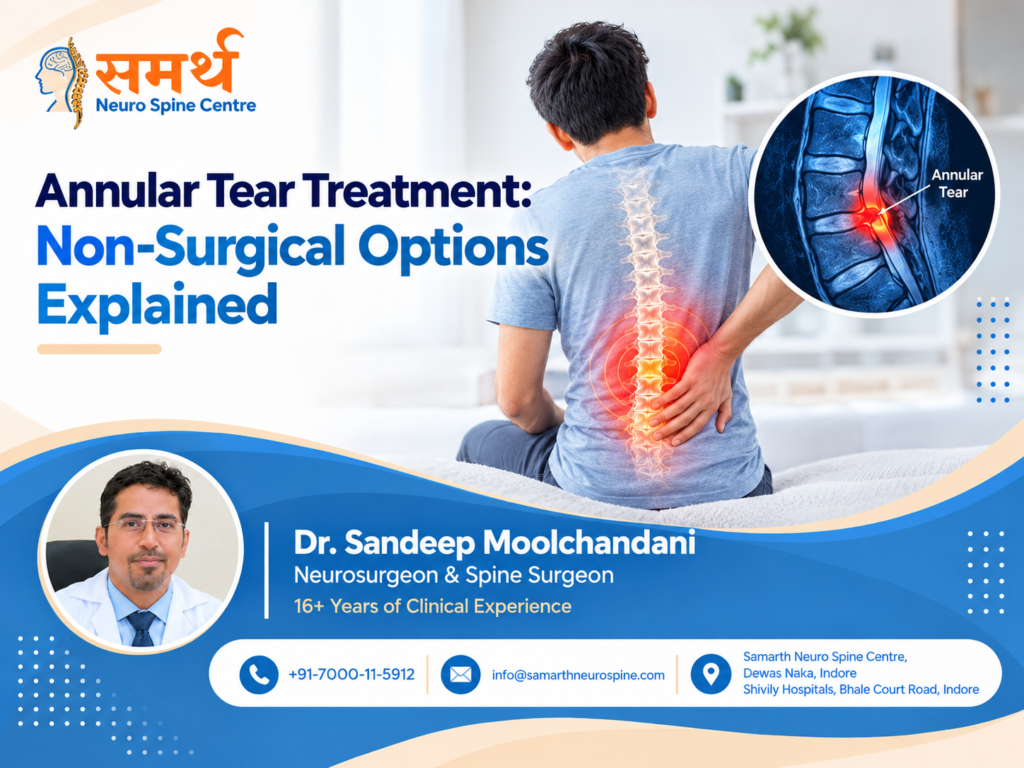
A spinal disc is like a jelly doughnut. The soft centre absorbs shock, and the strong outer ring (the annulus) holds it in place. An annular tear is a crack in that outer ring.
It usually comes from one of three things:
- Age related wear of the disc
- A sudden strain, such as lifting a heavy load with a twisted back
- Repeated stress from long sitting, driving or poor posture
A tear does not always hurt. Many people have tears on MRI and no pain at all. Trouble starts when the crack irritates nearby nerves or lets the inner disc material push outward.
Symptoms to Watch For
- Lower back pain that worsens with sitting, bending or lifting
- Pain that travels down the leg, often mistaken for sciatica
- Tingling or numbness in the leg or foot
- Stiffness and reduced flexibility
- Muscle weakness, in more serious cases
Back pain that stays beyond two to three weeks, or pain with numbness, deserves a proper check. If you are unsure whether your symptoms point to the disc, the Samarth Neuro Spine Centre team can examine you and read your MRI properly.
How Is It Diagnosed?
Diagnosis starts with a detailed history and a physical examination. The doctor checks your reflexes, muscle strength, sensation and how you move.
An MRI is the most reliable scan for confirming a tear and checking whether a disc is bulging or pressing on a nerve. Because tears also show up in people with no symptoms, the MRI is never read alone. It is matched with your symptoms and examination, so the scan does not decide your treatment by itself. A good Spine Treatment Centre in Indore does this as a matter of routine.
Annular Tear Treatment Without Surgery
Treatment moves in steps. Most people improve in the first two.
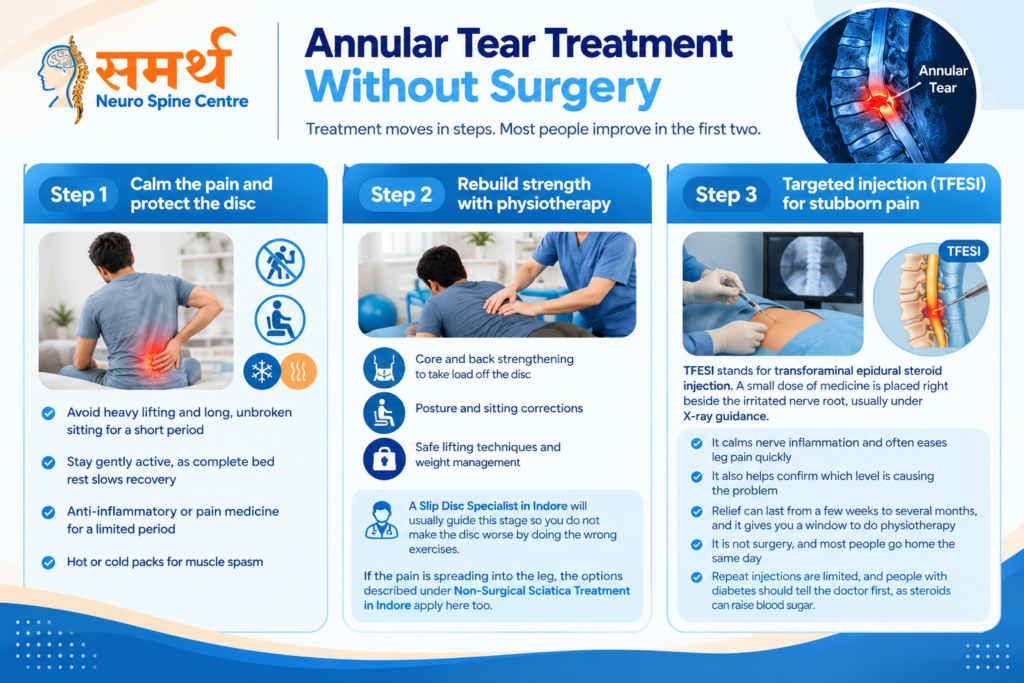
Step 1: Calm the pain and protect the disc
- Avoid heavy lifting and long, unbroken sitting for a short period
- Stay gently active, as complete bed rest slows recovery
- Anti-inflammatory or pain medicine for a limited period
- Hot or cold packs for muscle spasm
Step 2: Rebuild strength with physiotherapy
- Core and back strengthening to take load off the disc
- Posture and sitting corrections
- Safe lifting techniques and weight management
A Slip Disc Specialist in Indore will usually guide this stage so you do not make the disc worse by doing the wrong exercises. If the pain is spreading into the leg, the options described under Non-Surgical Sciatica Treatment in Indore apply here too.
Step 3: Targeted injection (TFESI) for stubborn pain
TFESI stands for transforaminal epidural steroid injection. A small dose of medicine is placed right beside the irritated nerve root, usually under X-ray guidance.
- It calms nerve inflammation and often eases leg pain quickly
- It also helps confirm which level is causing the problem
- Relief can last from a few weeks to several months, and it gives you a window to do physiotherapy
- It is not surgery, and most people go home the same day
- Repeat injections are limited, and people with diabetes should tell the doctor first, as steroids can raise blood sugar
What Recovery Usually Looks Like
Recovery is gradual, and rushing it is the most common reason for a relapse.
- Weeks 1 to 3: pain control and relative rest
- From about week 3: guided physiotherapy begins
- Weeks 6 to 12: return to normal activity in most people
If you feel better after two weeks and go straight back to heavy work or the gym, the tear can flare again. Build up slowly and keep up your core exercises even after the pain is gone.
When Is Surgery Considered?
Surgery is not the first answer for an annular tear. It becomes an option when:
- Leg weakness is increasing
- Imaging shows serious nerve compression
- Pain has not improved after a full, proper trial of non-surgical care, including TFESI
- There is any loss of bladder or bowel control, which is an emergency
When surgery is needed, the choice of procedure depends on the problem found. Some patients need a small decompression, while others with an unstable segment may need fusion, as explained in this guide to TLIF surgery. For a full view of what is available, see the page on Spine Surgery in Indore, which explains minimally invasive and open options.
Who Should You See?
Anyone searching for the Best Neuro Specialist in Indore should look for a doctor who examines you first and reads the MRI alongside your symptoms, not one who recommends a procedure from the report alone. You should leave with a clear plan, the reasons behind it and what to expect in the coming weeks.
Dr. Sandeep Moolchandani follows exactly this approach. He considers rest, physiotherapy and injections first, and advises surgery only when it is truly needed.
Frequently Asked Questions
1. Can an annular tear heal on its own?
Small tears can settle as inflammation calms, and many patients become pain free without any procedure. Larger tears may not fully close, but symptoms still often improve with physiotherapy and good posture.
2. How long does relief from a TFESI injection last?
It varies. Some people get relief for a few weeks, and others for several months. The aim is to calm the nerve so that physiotherapy can build lasting strength.
3. Is TFESI a surgery?
No. It is a minimally invasive injection, done without cutting or stitches. Most patients return home the same day.
4. What is the difference between an annular tear and a herniated disc?
An annular tear is a crack in the disc’s outer ring. A herniated disc is when the inner material pushes out through that crack. A tear can exist without a herniation, but a herniation needs a tear.
5. Can an annular tear cause leg pain?
Yes. When the tear irritates a nearby nerve, pain, tingling or numbness can travel down the leg, much like sciatica.
6. When should I consider surgery for an annular tear?
When weakness is growing, nerve compression is serious or pain remains after a complete trial of non-surgical care. Sudden bladder or bowel changes need urgent care.
7. Can an annular tear come back?
Yes, if the causes continue, such as poor posture, heavy lifting or a weak core. Regular exercise and healthy weight lower the risk.
Final Word
An annular tear sounds serious, but most patients recover with a structured, non-surgical plan. The key is a correct diagnosis, patience through the recovery weeks and a specialist who explains your options honestly.
Persistent back or leg pain is worth getting checked before it becomes a bigger problem. Consult Dr. Sandeep Moolchandani at Samarth Neuro Spine Centre, near Dewas Naka, Indore. If you are looking for the Best Doctor for Slip Disc in Indore, start with a proper examination and a clear plan.