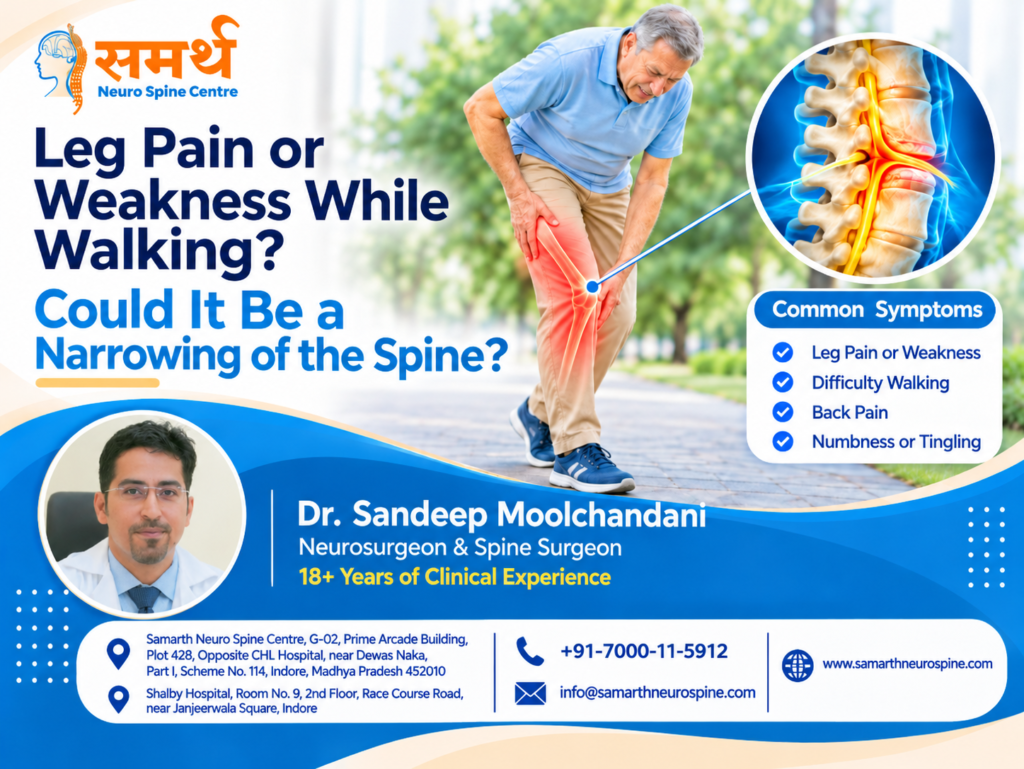
Yes. Leg pain or weakness while walking is often caused by lumbar spinal stenosis, a narrowing of the spinal canal in the lower back. Standing and walking squeeze the already tight space around your nerves, so the pain builds as you walk. Sitting or bending forward opens that space again, so it eases. An MRI and an examination by a spine specialist can confirm it, and most people try non-surgical care first.
If you must stop after a few hundred steps, lean on a shopping trolley, or sit down on the nearest bench, this pattern has a name and a cause. Understanding it is the first step to fixing it.
Why Does a Narrowing of the Spine Hurt More When You Walk?
The nerves to your legs travel inside a canal in the lower spine. With age, discs flatten, joints grow extra bone and ligaments thicken. The canal gets narrower, and the nerves get less room.
When you stand or walk, the spine arches slightly backward. That closes the canal a little more. The squeezed nerves complain with pain, heaviness, tingling or weakness in the legs. When you sit or bend forward, the canal opens and the nerves relax.
That is why the problem shows up on a walk, not in a chair.
Signs Your Leg Pain Could Be Spinal Stenosis
- Leg pain, cramping or heaviness that builds as you walk
- Relief within minutes of sitting down or bending forward
- Easier walking uphill or while pushing a trolley, because you lean forward
- Numbness, tingling or a weak, tired feeling in one or both legs
- A shorter and shorter walking distance over months
- Back pain that may be mild or absent

Doctors call this neurogenic claudication, which simply means nerve-related leg pain on walking.
Leg Pain on Walking: Spine or Circulation?
Poor blood flow in the leg arteries can also cause leg pain on walking, so the two get confused. A few clues help:
| Clue | Spinal stenosis | Poor circulation |
| Relief | Sitting or bending forward | Simply stopping and standing still |
| Walking uphill | Often easier | Usually harder |
| Cycling | Often comfortable | Often painful |
| Feet | Normal colour and warmth | Cold, pale or weak pulses |
| Type of pain | Tingling, heaviness, weakness | Cramping, calf pain |
This is only a guide. A doctor’s examination and scans sort it out, which matters because the treatments are completely different.
Walking shorter distances every month? Find out what is squeezing your nerves before it gets worse.
How It Is Diagnosed
- Your story: how far you walk, what eases the pain, and any bladder or bowel change
- Examination: leg strength, reflexes, sensation, walking pattern and circulation
- MRI of the lumbar spine: shows how narrow the canal is and which nerves are crowded
- Extra tests when needed: an X-ray with bending views, or a nerve study, if the picture is unclear
A narrow canal on a scan is not enough by itself. Many people with narrowing have no symptoms. What matters is whether the scan matches your complaints.
Treatment Without Surgery
Most people begin here, and many get real relief:
- Physiotherapy: core strengthening and flexion-based exercises that open the canal
- Medication: short courses of pain relief or nerve-calming medicine, chosen by your doctor
- Walking aids and posture: a stick, a trolley or a slight forward lean can extend your walking distance
- Epidural steroid injection: a short-term option for strong leg pain that is not settling
- Weight and activity management: gentle cycling and swimming keep you moving
If leg pain is shooting down from the back, a proper Sciatica Treatment in Indore plan should first confirm whether stenosis is the real cause, since the two can look alike. Our guide on how doctors decide between physiotherapy and surgery for back pain explains the decision step by step.
When Surgery Starts to Make Sense
Surgery is for specific situations. It is worth discussing when:
- Leg pain or weakness is limiting everyday life despite a fair trial of non-surgical care
- Your walking distance keeps shrinking
- Weakness, such as a dragging foot, is getting worse
- The MRI shows significant narrowing at the level that matches your symptoms
Go to a hospital the same day if you develop loss of bladder or bowel control, numbness around the groin or inner thighs, or sudden severe leg weakness. These can mean severe nerve compression.
What Decompression Surgery Does
The aim is simple: make room for the nerves. The surgeon removes the thickened bone or ligament pressing on them. In many patients this is done through a small opening, without fusing the spine. Fusion is added only when the spine is also unstable.
Spinal Decompression Surgery in Indore is a planned operation, not an emergency one in most cases. Trials comparing surgery with non-surgical care suggest that suitable patients often get better walking and less leg pain after surgery, though the gap between the groups narrows over the years. That is why timing and patient selection matter.
At Samarth Neuro Spine Centre, Dr. Sandeep Moolchandani goes through your MRI with you and recommends surgery only when it matches your symptoms. We have written about a real case of lumbar canal stenosis surgery in a 68-year-old patient with diabetes and kidney failure, which shows how this decision is made in a complex patient.
Choosing Who to See
If surgery is on the table, a second opinion is sensible and fair. Look for a Spine Specialist in Indore who examines you, reads your actual MRI images and explains the choices, including doing nothing for now. Many families also ask which doctor is the Best Spine Surgeon in Indore. A better question is who will explain your options honestly.
Frequently Asked Questions
1. Why does my leg hurt or feel weak when I walk?
A common cause is a narrowing of the spine (lumbar spinal stenosis). Walking and standing arch the lower back and shrink the canal, which squeezes the nerves. Sitting or bending forward opens the space and eases the pain. Poor circulation can cause similar pain, so a doctor should check.
2. Can spinal stenosis be cured without surgery?
The narrowing itself does not reverse, but many people control their symptoms well with exercises, medication and activity changes. Surgery is the way to physically make room for the nerves.
3. What is the best exercise for lumbar spinal stenosis?
Gentle forward-bending (flexion) exercises, core strengthening and cycling are often helpful. Ask your physiotherapist for a plan that suits your condition.
4. Is walking good or bad for spinal stenosis?
Short walks are usually good, and rest breaks are fine. Leaning slightly forward or using a trolley or walking stick can help you go farther.
5. When should I see a doctor for leg pain while walking?
When it limits your walking, keeps getting worse, or comes with weakness or numbness. Go to hospital at once for bladder or bowel changes.
6. Is spinal stenosis surgery safe in older people?
Often yes, when health conditions are well controlled and the case is planned carefully. Age alone is rarely the deciding factor.
7. Is leg pain while walking always a spine problem?
No. Poor circulation, nerve disease and joint problems can also cause it. A doctor’s examination and an MRI show whether a narrowing of the spine is the cause.
8. How long does recovery take after decompression surgery?
Leg pain often eases soon after surgery. Walking and strength improve over weeks to months with physiotherapy.
Final Word
Leg pain that gets worse as you walk is a signal from squeezed nerves, not an unavoidable part of ageing. The right answer depends on your scan, your examination and how much the pain limits your life. If you have been searching for a Spine Surgeon Near Me because your walking keeps shrinking, get a proper assessment before the nerves pay the price.
Ready to walk further with less pain? Book Your Consultation at Samarth Neuro Spine Centre